
Apple Vision Pro still lacks a killer app two years after launch
Summary
The Apple Vision Pro is impressive tech with a sleek design and mind-blowing AR/VR demos. However, it's heavy, lacks a compelling "killer app" two years after launch, and feels isolating. Despite its potential, it struggles to justify its high price and frequent use.
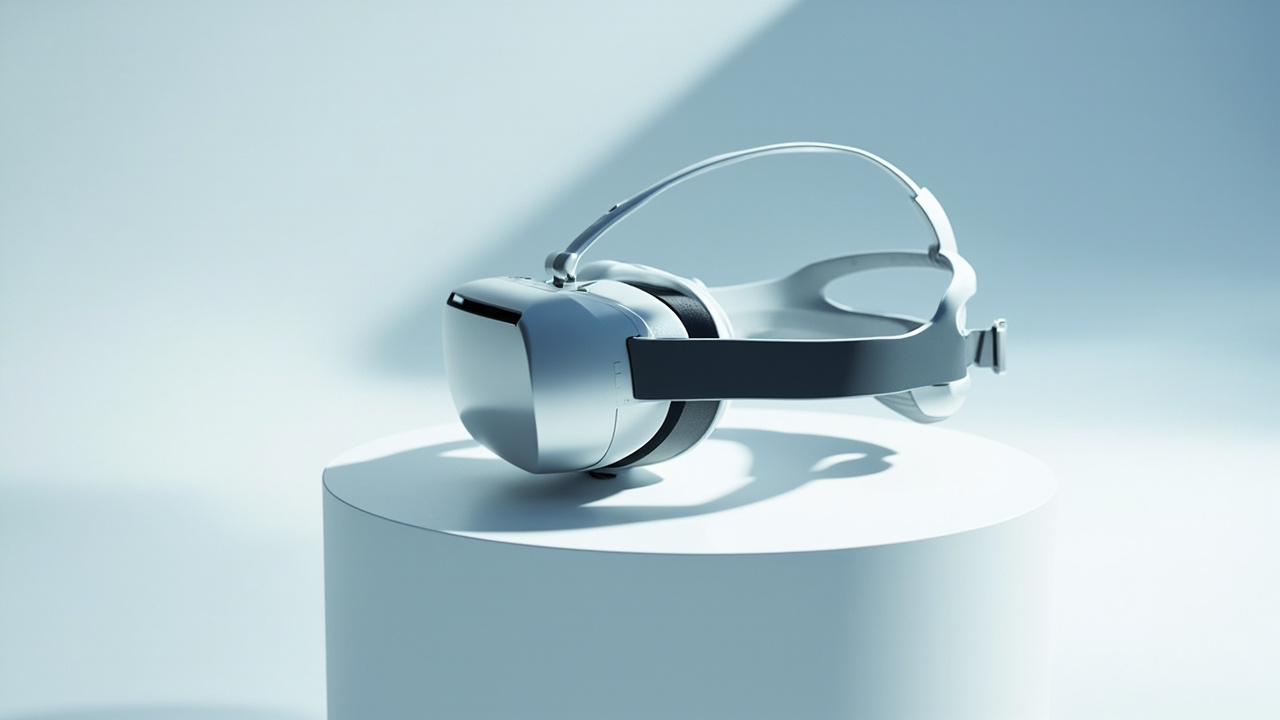
The Apple Vision Pro is a technical marvel with no purpose
Apple’s $3,500 Vision Pro headset is an impressive piece of hardware that fails to answer a basic question: what is it for? After using it extensively two years after its launch, the device feels like a stunning tech demo in search of a lasting application.
It is arguably the best consumer headset on the market. Yet its app ecosystem remains sparse, its weight is burdensome, and no killer use case has emerged to justify its existence or its price.
A premium, heavy design
The Vision Pro’s design is sleek and feels like premium equipment. Its aluminum frame, curved glass front, and magnetic light seal give it a distinct, futuristic aesthetic.
That quality comes with significant heft. The headset weighs between 26.4 and 28.2 ounces—roughly one-and-a-half iPad Pros. An improved headband and external battery help, but neck strain becomes noticeable after an hour or two of use.
Mind-blowing specs with little to do
The technical experience is where the Vision Pro truly shines. Its micro-OLED displays, eye-tracking interface, and spatial audio create moments of genuine awe.
This is best illustrated by the free “Encounter Dinosaurs” app. A virtual Rajasaurus convincingly enters your room, makes eye contact, and reacts to your voice. The lighting and sound are perfectly synced, creating a brief, jaw-dropping illusion.
That experience encapsulates the device’s core problem: it’s a spectacular tease. The demo ends after a few minutes, leaving you with incredibly advanced technology and nothing compelling to do next.
- Display: Dual micro-OLED, roughly 3660 x 3200 pixels per eye.
- Processors: Apple M2 and R1 chips.
- Field of View: 100° x 75°.
- UI: Controlled entirely via eye tracking and hand gestures.
The exhausting reality of daily use
For work, the Vision Pro can function as a spatial computer. You can float multiple windows—a Mac display, a music app, a video stream—around your environment and manipulate them with gestures.
While this works flawlessly, it’s also exhausting. The combination of the headset’s weight, potential eye strain, and the sheer sensory overload makes prolonged use feel like a chore rather than a productivity breakthrough.
For entertainment, the headset excels as a private, high-end media viewer. Streaming movies, watching NBA games, or viewing concerts on a virtual giant screen is spectacular, with better-than-4K clarity and brilliant colors.
A barren gaming and app landscape
Gaming highlights the platform’s lack of support. There are no major AAA titles built for the Vision Pro. The experience is a mix of tech demos and smaller apps.
A standout is Retrocade, a collection of 1980s arcade games played on perfect virtual recreations of original cabinets. It’s brilliantly executed but underscores the irony: the best use of this advanced technology is to simulate 40-year-old games.
Overall, the App Store for Vision Pro remains a “lonely place” two years in. The promised ecosystem of transformative apps has not materialized.
The flawed promise of augmented reality
Apple pitches the Vision Pro as an augmented reality device, but it’s a compromised experience. You see the real world through cameras, not your own eyes, with a field of view about half that of natural vision.
The passthrough video is blurry at the edges, while digital elements are crystal clear. This disconnect, combined with the isolation of wearing a headset, makes the experience feel alienating and unsettling.
There is no app that overcomes this fundamental friction. The device becomes something you might use to impress a friend or on a long flight, not a daily tool.
Waiting for a future that may not come
The Vision Pro’s ultimate failure is its lack of a transformative, exclusive experience. The dinosaur demo proves the potential, but nothing else delivers on it for more than a few minutes.
Apple has reportedly shelved plans for a Vision Pro 2 to focus on AI-powered smart glasses. For now, the Vision Pro stands as a cautionary tale: a product can be technically superior to everything else and still struggle to find a reason to exist.
Related Articles
YouTube launches native Vision Pro app with 8K streaming
YouTube's new Vision Pro app lets users stream videos, including 8K and 360° content, directly on the headset. It's a standalone app designed for spatial computing.
Viture Luma Pro AR Glasses Hit Record Low Price of $424
Viture Luma Pro AR glasses, praised as the brightest, are on sale for $424 (down from $629). They offer 1,000 nits brightness, a 152-inch virtual screen, and work in well-lit settings.
Stay in the loop
Get the best AI-curated news delivered to your inbox. No spam, unsubscribe anytime.