
Elon Musk directs xAI to plan moon factory with satellite catapult
Summary
Elon Musk wants a moon factory and electromagnetic catapult to launch AI satellites, an idea echoing 1970s proposals for lunar mass drivers to exploit space resources.
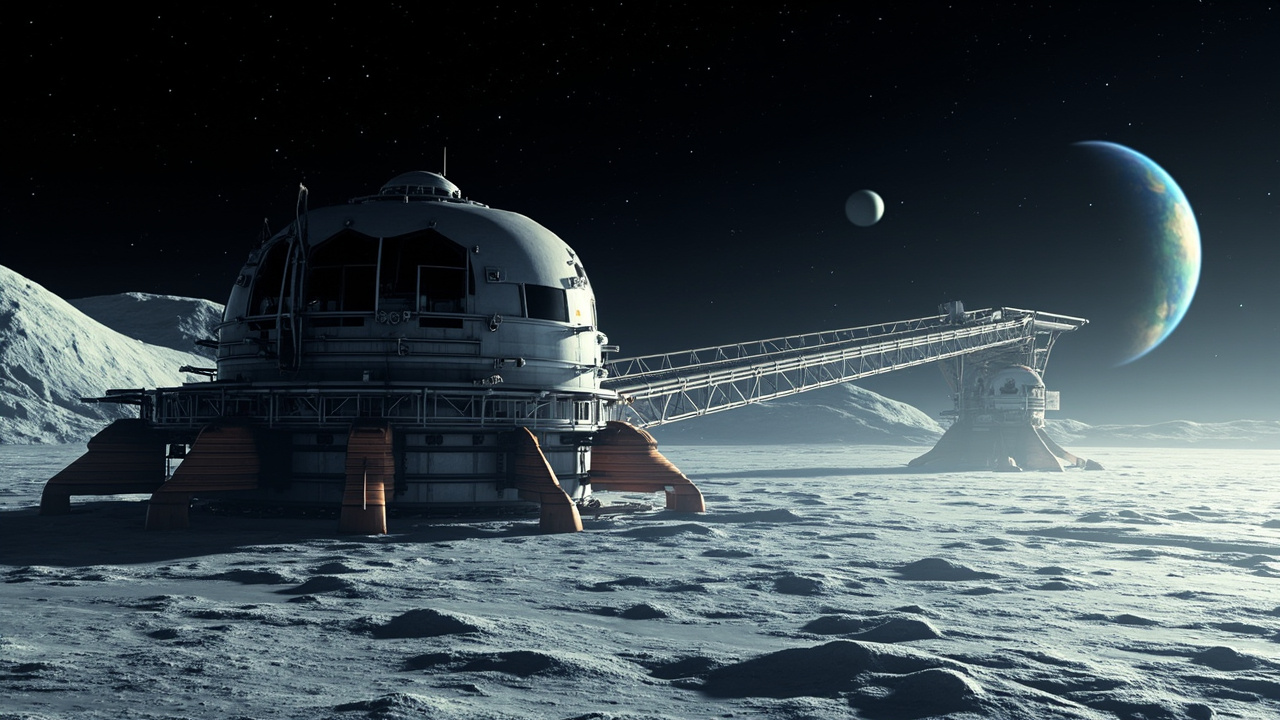
Elon Musk wants a moon factory and a giant catapult
Elon Musk has directed staff at his AI company, xAI, to plan for a factory on the moon. He said the facility would build artificial intelligence satellites and launch them into space using a massive electromagnetic catapult, known as a mass driver.
Musk made the comments in an all-hands meeting with xAI employees on February 11th. He argued that building and launching AI hardware from the lunar surface could become the lowest-cost method within two to three years.
"By using an electromagnetic mass driver and lunar manufacturing," Musk wrote in a related update, "it is possible to put 500 to 1000 TW/year of AI satellites into deep space."
The lunar mass driver is an old idea
Musk is not the first to propose launching material from the moon with a railgun-like system. The concept was popularized by space visionary Gerard O'Neill in 1974.
O'Neill, along with colleague Henry Kolm and MIT students, built early prototypes. Their research suggested a driver roughly 520 feet (160 meters) long could boost material off the lunar surface.
They envisioned it launching mined lunar ore into space to construct solar power satellites and space colonies. Later studies indicated a system several kilometers long could deliver 600,000 tons of material per year to a stable orbital point.
Modern research supports the concept
Recent analysis has bolstered the case for a lunar mass driver. In 2023, Robert Peterkin of General Atomics Electromagnetic Systems filed a detailed report on the subject for the Air Force Office of Scientific Research.
"A modern electromagnetic launcher is a superior choice, because it can use abundant solar energy as a prime energy source instead of importing chemical rocket fuel from Earth," Peterkin told Space.com.
He argued the U.S. should adapt technology from the electromagnetic aircraft launch system (EMALS) used on U.S. Navy carriers. Peterkin's report highlighted key lunar resources that could fuel a space economy:
- Silicon
- Titanium
- Aluminum
- Iron
- Water (for potential propellant)
Starship is seen as the key enabler
Both Musk and independent researchers point to SpaceX's Starship as the vehicle that could make a lunar base possible. The fully reusable rocket is designed to carry massive payloads to the moon.
"A SpaceX Starship with the ability to deliver 100 metric tons to the lunar surface will be a true enabler," Peterkin wrote in his report. He recommended that any future NASA or SpaceX lunar base be sited to accommodate a mass driver launch system.
Musk echoed this, stating that "Starship will be capable of landing massive amounts of cargo on the moon" thanks to advancements like in-space refueling.
The goal is to harness solar power in space
The ultimate aim of launching AI satellites from the moon is to capture vast amounts of solar energy in space. Musk explicitly linked the plan to ascending the Kardashev scale, a method of measuring a civilization's technological advancement based on energy use.
Peterkin's report concluded that a future lunar economy could use local resources to "resupply, repair and refuel spacecraft in lunar orbit at lower cost" than launching everything from Earth.
While the timeline is ambitious, the core idea of using the moon's weak gravity and local materials for space manufacturing is gaining renewed traction, driven by new heavy-lift rockets and billionaire ambitions.
Related Articles
Reliance Jio to invest $110 billion in AI datacenters over seven years
Reliance Jio plans to invest $110 billion in AI datacenters over seven years, aiming to make AI services as affordable as it made mobile data in India.

Study: AI Chatbots Make Users 76% More Likely to Misdiagnose
A study shows LLM chatbots give unreliable medical advice. In tests, people using AI were less likely to correctly diagnose conditions than those not using AI. Issues include users omitting key details and chatbots giving inconsistent or incorrect information.
Stay in the loop
Get the best AI-curated news delivered to your inbox. No spam, unsubscribe anytime.