
February 2026 'Miracle Month' Is a Recurring Calendar Myth
Summary
The article debunks viral claims about February 2026 being a magical "miraclein" or unlucky month. It explains these are common calendar patterns and planetary alignments, not rare events, attributing such beliefs to apophenia—our brain's tendency to find false patterns.
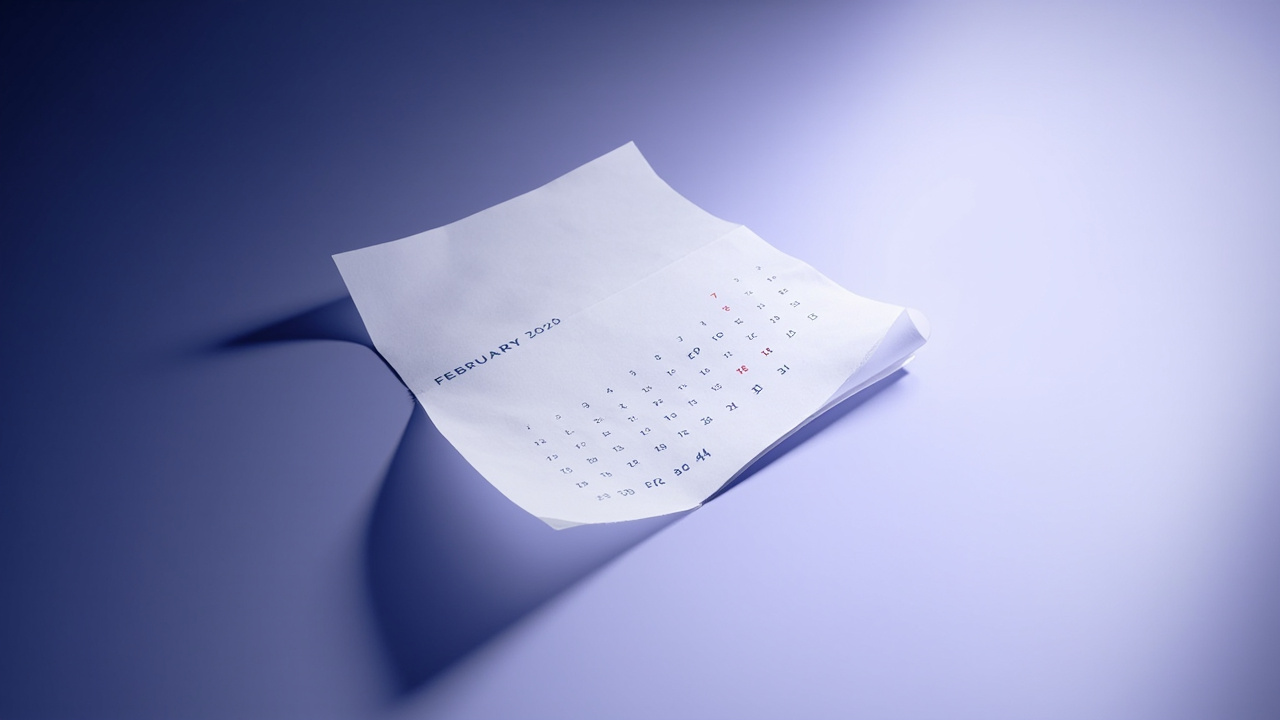
The February 2026 "Miraclein" is a myth
Social media is buzzing with claims that February 2026 is a rare "miraclein" month, where every day of the week occurs exactly four times. Viral posts claim this happens only once every 823 years and signals a month of abundance, or "moneybags."
A quick look at a calendar debunks this. February has 28 days, and four times seven equals 28. This alignment happens in every non-leap-year February. The claim is a recurring myth, not a celestial anomaly.
February 2026 is not a perfect month
Another claim labels this February a "perfect month" because it begins and ends on a Sunday, creating a neat grid on the calendar. This is aesthetically pleasing but not rare.
February 2015 had the same structure, and February 2037 will, too. It's a simple function of the calendar's design, not a unique event.
The planetary alignment is normal
A more cosmic claim involves a six-planet alignment on February 28th. Some social media users warn it's a once-in-6,000-years event that will cause gravitational upheaval or a "paradigm shift."
In reality, these alignments are common. Astronomers call them a "planetary parade," and they occur every few years.
- The planets are not physically lining up; they merely appear clustered from Earth's viewpoint.
- You cannot see Uranus or Neptune without a telescope.
- A seven-planet alignment occurred just last year, in February 2025.
The event poses no danger, won't affect gravity, and is not a sign of anything beyond ordinary orbital mechanics.
Three Friday the 13ths is not a curse
2026 does contain three Friday the 13ths: in February, March, and November. This has led some to declare the year cursed. While three is the maximum possible in a year, it's not unusual.
The same pattern occurred in 2015 and will happen again in 2037. The fear of Friday the 13th is a cultural superstition with murky origins, not an indicator of luck.
- Some theories link it to Judas being the 13th apostle at the Last Supper.
- Other cultures have different unlucky numbers, like 4 in China or 17 in Italy.
This is apophenia in action
The spread of these myths is a textbook case of apophenia: the human tendency to perceive meaningful connections between unrelated things. Our brains are wired to find patterns, a trait essential for survival but prone to error.
This explains why people see faces in clouds, believe in lucky streaks, or think calendar quirks are prophetic. Social media amplifies this by algorithmically connecting people who find the same patterns compelling.
Why people share these myths
Sharing a post about "moneybags February" is a low-stakes gamble. It costs nothing to repost, and the potential reward—even if just a feeling of being "in the know"—can seem worth it. This is a modern, viral twist on Pascal's Wager.
People share misinformation for various reasons:
- The thrill of possessing "secret" knowledge.
- Signaling belonging to a specific in-group.
- Simply seeking attention or engagement.
While believing February is magical is mostly harmless, the same cognitive machinery spreads more dangerous conspiracy theories. The pattern-matching instinct that creates a "miraclein" is no different from the one that fuels genuine misinformation.
Related Articles

FDA Removes Warning Page on Ineffective Autism Treatments Like Chlorine Dioxide
FDA removed a warning about harmful fake autism cures like chlorine dioxide. HHS said it was outdated, but advocates disagree. Under RFK Jr., HHS has appointed proponents of such unproven treatments to an autism panel, alarming experts.

Claude AI can create calendar events from a screenshot
Claude can now create iCal files from schedules in screenshots or photos, letting you quickly import multiple events into your digital calendar instead of adding them manually.
Stay in the loop
Get the best AI-curated news delivered to your inbox. No spam, unsubscribe anytime.