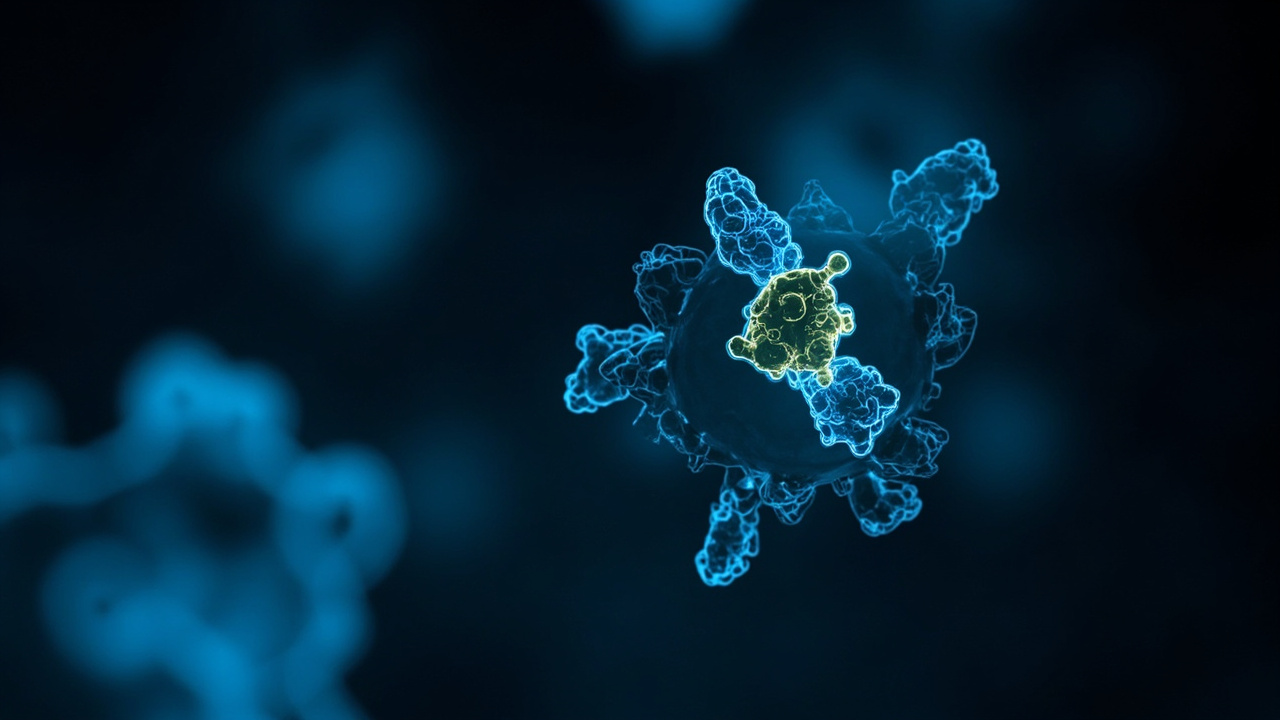
Personalized mRNA vaccine triggers lasting immunity in aggressive breast cancer
Summary
Personalized mRNA vaccines show lasting T cell immune response in early-stage triple-negative breast cancer patients.

Personalized mRNA vaccine shows promise for breast cancer
A new, personalized mRNA vaccine has shown it can trigger a lasting immune response against a particularly aggressive form of breast cancer. The vaccine, developed by BioNTech co-founder Ugur Sahin and his team, is designed for patients with early-stage, high-risk triple-negative breast cancer (TNBC) who have already undergone surgery.
The study, published in Nature, builds directly on the mRNA technology used in COVID-19 vaccines. Instead of targeting a virus, this vaccine is custom-built for each patient to target the unique mutations present in their own tumor. The goal is to train the patient's immune system to recognize and destroy any remaining cancer cells, preventing the disease from returning.
How the individualized vaccine works
To create each bespoke vaccine, researchers first sequence the DNA of a patient's surgically removed tumor. They then identify up to 20 mutations specific to that cancer, known as neoantigens. An mRNA vaccine is then manufactured to encode for these neoantigens.
When injected, the vaccine instructs the patient's cells to produce these cancer-specific proteins. This flags them to the immune system, priming T cells—the body's elite attack forces—to hunt for and eliminate any cells bearing those same markers. The approach turns a patient's unique cancer fingerprint into its own wanted poster.
- Treatment is for early-stage, high-risk triple-negative breast cancer post-surgery.
- Each vaccine targets up to 20 patient-specific tumor mutations (neoantigens).
- The technology is an adaptation of the mRNA platform proven in COVID-19 vaccines.
Durable immune response observed in patients
The clinical trial involved 30 patients who received the personalized vaccine after standard surgery and chemotherapy. The key finding was that the vaccine successfully induced a strong and durable T cell response against the targeted neoantigens.
Researchers tracked these immune responses for over three years. They found that the vaccine-primed T cells not only persisted but also evolved, showing signs of long-term memory. This suggests the immune system remained on guard, potentially providing lasting protection against recurrence.
"The T cell responses we observed were substantial and durable," said Sahin. This persistence is critical, as cancer recurrence can happen years after initial treatment.
A growing field of personalized cancer vaccines
This study is part of a significant shift in oncology toward highly personalized immunotherapies. BioNTech, along with other companies like Moderna, is advancing multiple trials using this mRNA vaccine approach against different cancers.
Previous research has shown promise for personalized vaccines in treating pancreatic cancer and melanoma. This new data in breast cancer is particularly important because TNBC has fewer treatment options and a higher rate of recurrence than other breast cancer subtypes.
The success here adds to the evidence that targeting a patient's unique tumor neoantigens is a viable strategy. It moves the field beyond a "one-size-fits-all" treatment toward a future where a cancer vaccine is as unique as the patient's disease.
Next steps and future challenges
While the immune response data is promising, the ultimate test is whether the vaccine improves survival and prevents cancer from returning. Larger, randomized Phase 3 trials are now needed to confirm if the strong T cell activity translates into a real clinical benefit for patients.
Another significant challenge is the complexity and cost of manufacturing. Creating a unique vaccine for each patient is a logistically demanding and expensive process, currently taking several weeks. Streamlining this production will be essential for making such treatments accessible.
Despite these hurdles, the study represents a major step. It provides a blueprint for using mRNA technology to create a new class of cancer treatments that are tailored to the individual, offering hope for longer-term control of aggressive cancers.
Related Articles
Chinese scientists create cheaper, more efficient cancer-killing NK cells
Chinese researchers developed a more efficient method to produce cancer-fighting natural killer (NK) cells from cord blood stem cells, reducing costs and preparation time for immunotherapy.
Northwestern redesigns HPV vaccine to boost cancer-fighting T cells
Northwestern scientists found that rearranging vaccine components at the nanoscale, without changing ingredients, can dramatically boost immune response against HPV-driven cancers, advancing structural nanomedicine.
Stay in the loop
Get the best AI-curated news delivered to your inbox. No spam, unsubscribe anytime.