
Roman mosaic in Britain depicts lost Aeschylus Trojan War story
Summary
A UK Roman mosaic depicts a rare Aeschylus version of the Trojan War, not Homer's, showing Roman Britain's artistic ties to the wider Mediterranean world.
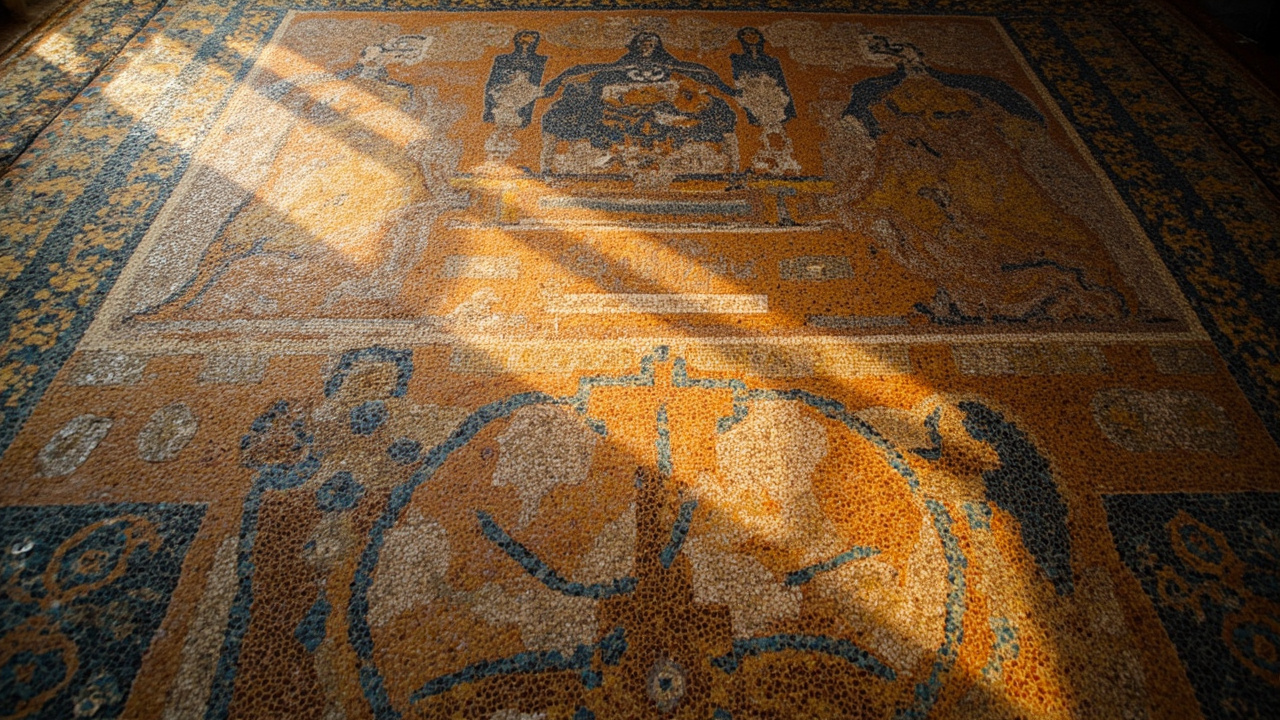
A Roman mosaic tells a lost story
A Roman mosaic discovered in a British farmer's field depicts a lost version of the Trojan War, not the famous story from Homer's Iliad. New research from the University of Leicester reveals the artwork follows a largely forgotten tragedy by the Greek playwright Aeschylus.
The Ketton mosaic was found in Rutland in 2020. It is considered one of the most significant Roman-era discoveries in Britain in the last century.
Scenes from a forgotten play
The mosaic shows three key scenes involving the Greek hero Achilles and the Trojan prince Hector. These include their duel, Achilles dragging Hector's body, and King Priam ransoming his son's body with gold.
Initial analysis suggested the scenes were from Homer's epic. The new study concludes they instead match the plot of Aeschylus's play Phrygians. This version of the Trojan War story is considered lost, as the full text has not survived.
Choosing this obscure narrative would have been a deliberate statement by the villa's owner. "It would have set the villa's owner apart and signaled cultural sophistication," said lead researcher Dr. Jane Masséglia.
A Mediterranean pattern book
The research also shows the mosaic's designs were not original to Roman Britain. They were part of a centuries-old, circulating repertoire of Mediterranean art.
Dr. Masséglia identified specific patterns borrowed from much older artifacts. "The top panel is actually based on a design used on a Greek pot that dates from the time of Aeschylus, 800 years before the mosaic was laid," she said.
Other motifs were traced to older silverware, coins, and pottery from Greece, Turkey, and Gaul. This proves a deep artistic connection across the Roman Empire.
- Designs originated from artifacts 800 years older than the mosaic.
- Patterns were found on objects from Greece, Turkey, and Gaul.
- This indicates a shared "pattern catalogue" used by craftspeople for generations.
Discovery and significance
Local resident Jim Irvine found the mosaic on his family farm during a 2020 walk in the COVID-19 lockdown. The discovery prompted a major excavation by the University of Leicester Archaeological Services, funded by Historic England.
The site was granted Scheduled Monument status due to its national importance. Full excavations took place in 2021 and 2022, with the final publication of findings now in preparation.
"Jane's detailed research... reveals a level of cultural integration across the Roman world that we're only just beginning to appreciate," said Jim Irvine, who made the initial discovery.
Redefining Roman Britain
The findings challenge the view of Roman Britain as a remote, culturally isolated province. The mosaic demonstrates that local craftspeople were fully integrated into wider Mediterranean artistic traditions.
"Romano-British craftspeople weren't isolated from the rest of the ancient world," Dr. Masséglia stated. "At Ketton, we've got Roman British craftsmanship but a Mediterranean heritage of design."
Experts not involved in the study agree. "This is an exciting piece of research," said Professor Hella Eckhardt of the University of Reading. It shows how stories were transmitted "through a repertoire of images created by artists working in all sorts of materials."
The research offers a new perspective on the people who lived there. "This fascinating new research offers a more nuanced picture of the interests and influences of those who may have lived there," said Historic England's Rachel Cubitt.
Related Articles

67,000-year-old handprint in Indonesia is world's oldest dated art
A 67,000-year-old red hand stencil in an Indonesian cave is now the world's oldest dated art, reshaping our understanding of early human creativity and migration.

Ancient Baltic warriors sailed to Denmark 2,400 years ago, study finds
New analysis of Scandinavia's oldest plank boat suggests it was built in the Baltic Sea region around 2,400 years ago, based on pine pitch used for waterproofing. A preserved fingerprint was also found in the caulk.
Stay in the loop
Get the best AI-curated news delivered to your inbox. No spam, unsubscribe anytime.