
Scientists identify two gut bacteria that cause chronic constipation
Summary
Two gut bacteria break down colon mucus, causing chronic constipation. This may explain treatment-resistant cases and link to Parkinson's disease. Blocking a bacterial enzyme prevented constipation in mice, suggesting new treatments.
Two gut bacteria cause chronic constipation
Scientists have identified two gut bacteria that work together to destroy the colon's protective mucus, causing chronic constipation. The findings, from Nagoya University in Japan, were published in the journal Gut Microbes.
The bacteria are Akkermansia muciniphila and Bacteroides thetaiotaomicron. They break down the slippery mucus layer that keeps stool soft and the colon lubricated. When too much mucus is degraded, stool becomes dry and difficult to pass.
This discovery helps explain why common laxatives often fail for millions with persistent constipation. It also reveals a potential bacterial link to the severe constipation that frequently precedes Parkinson's disease.
How the bacteria destroy protective mucus
The research focused on colonic mucin, the gel-like substance that coats the large intestine. This mucus is essential for stool moisture and protects the gut lining from bacteria.
The team found the two bacteria dismantle this barrier in a specific sequence. First, B. thetaiotaomicron produces enzymes that strip away sulfate groups, which act as a defensive shield on the mucin.
Once those protective groups are removed, A. muciniphila can digest the exposed mucin. This stepwise degradation leads to a critical loss of lubrication.
- Bacteroides thetaiotaomicron initiates the attack by removing sulfate groups.
- Akkermansia muciniphila then digests the now-vulnerable mucus.
- The result is dry, hard stool that is difficult to pass.
A crucial link to Parkinson's disease
The study uncovered a significant connection to Parkinson's disease. Patients with Parkinson's, who often experience severe constipation decades before motor symptoms like tremors begin, were found to have higher levels of these specific mucus-degrading bacteria.
Constipation in Parkinson's has traditionally been blamed on nerve damage. This new evidence suggests gut bacteria may play a meaningful role in driving these early, persistent symptoms.
For many patients, constipation can begin 20 to 30 years before a Parkinson's diagnosis. The bacterial mechanism identified offers a new potential explanation for this long-standing mystery.
Blocking the process prevents constipation in mice
To test if stopping this bacterial activity could prevent constipation, researchers genetically modified one of the bacteria. They altered B. thetaiotaomicron so it could no longer produce the key enzyme, sulfatase, that removes the protective sulfate groups from mucin.
"We put these modified bacteria into germ-free mice together with Akkermansia muciniphila, and surprisingly the mice did not develop constipation; the mucin stayed protected and intact," said lead author Tomonari Hamaguchi, a lecturer at Nagoya University.
This experiment proved that disabling the sulfatase enzyme blocked the entire mucus degradation process. It suggests drugs designed to inhibit this enzyme could form a new treatment strategy.
A new approach to treatment-resistant constipation
The findings point toward a fundamentally different approach for millions with chronic, treatment-resistant constipation. Current treatments like laxatives focus on stimulating gut movement, but they may not help if the root cause is a degraded mucus barrier.
Future therapies could instead aim to protect the colon's mucus layer by targeting the underlying bacterial cause. This could be especially relevant for patients with Parkinson's disease and those with chronic idiopathic constipation (CIC), where no clear cause like slow gut movement is found.
By shifting focus from gut motility to the microbial ecosystem, this research opens a new path for developing more effective treatments for a condition that often defies standard care.
Related Articles
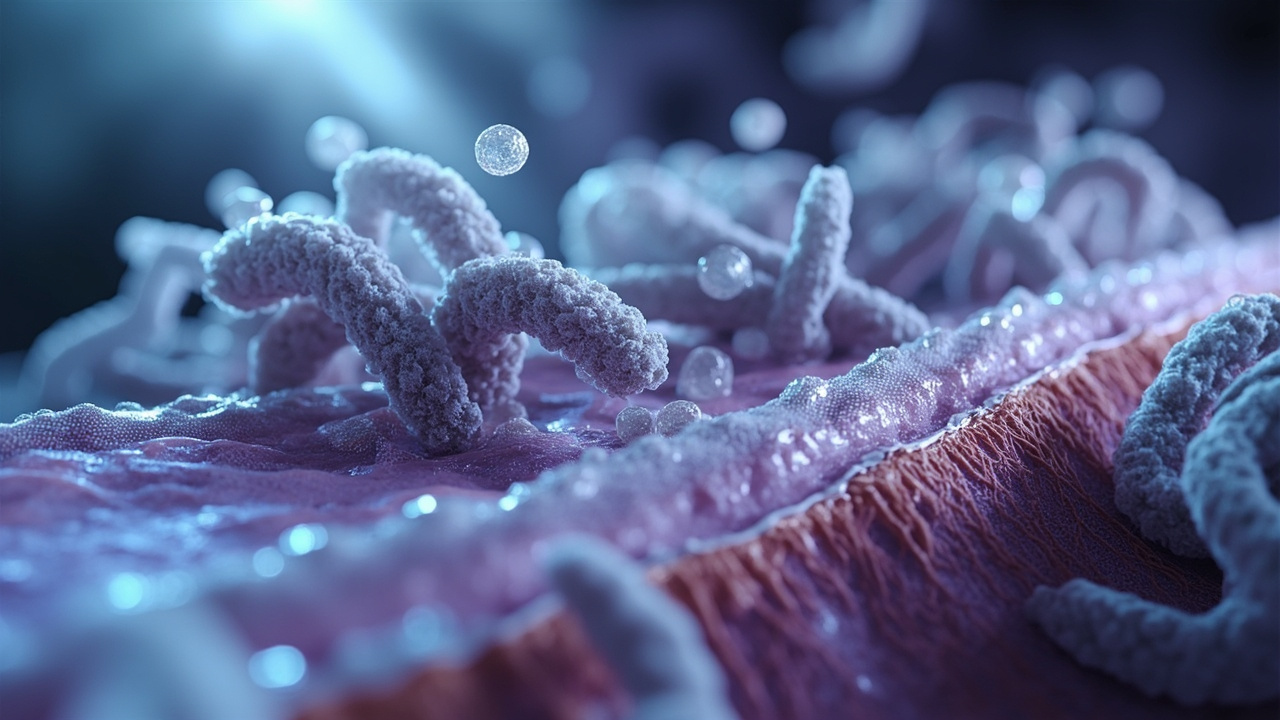
A new study pinpoints two species of bacteria that work together to dry out the lining of the gut and cause constipation
Two gut bacteria, Bacteroides thetaiotaomicron and Akkermansia muciniphila, work together to break down the colon's protective mucus, causing dryness and constipation.
UFC's Anthony Hernandez vows to 'torture' Sean Strickland over racist post
UFC's Anthony Hernandez responds to Sean Strickland's racist post, vowing to "torture him" in their fight Saturday.
Stay in the loop
Get the best AI-curated news delivered to your inbox. No spam, unsubscribe anytime.