
Scientists map Moon's young tectonic ridges, a new source of moonquakes
Summary
Scientists mapped small mare ridges on the Moon, revealing they are young, widespread, and caused by lunar contraction. This suggests new moonquake sources, impacting future mission safety.
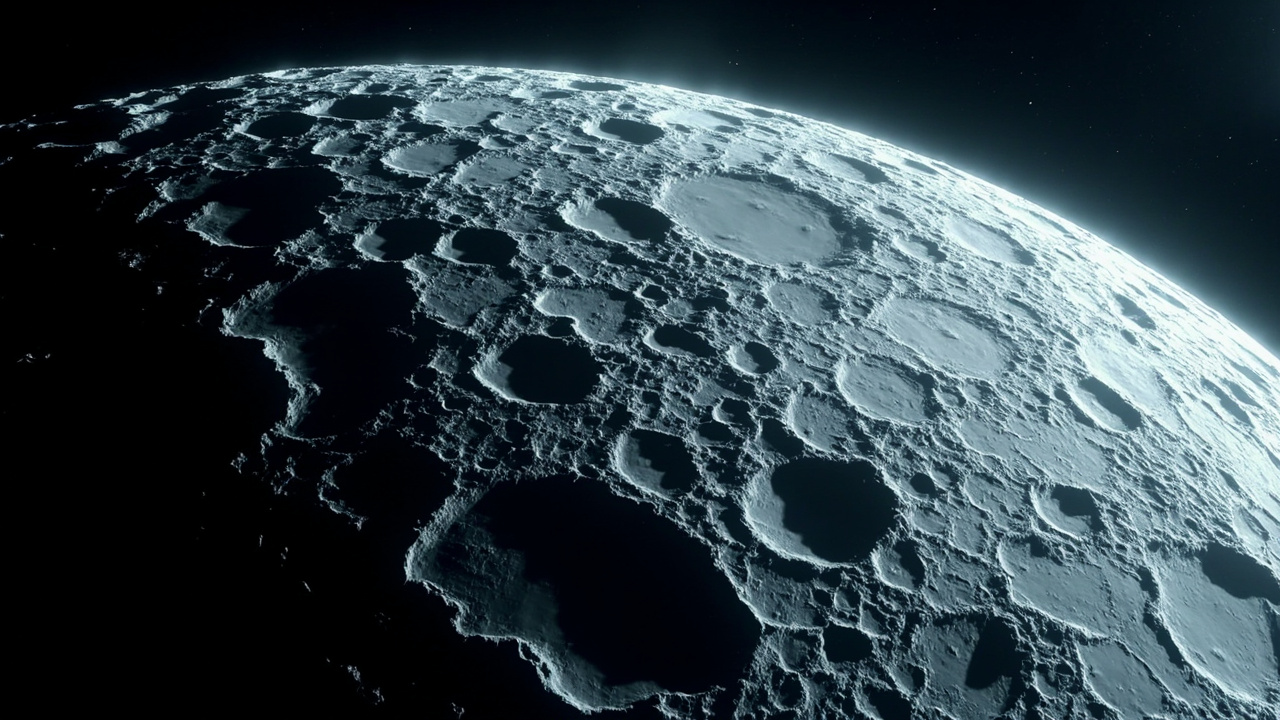
Scientists map the Moon's youngest tectonic features
Researchers have created the first global map of small mare ridges, revealing they are young, widespread, and a new source of potential moonquakes. The findings were published in The Planetary Science Journal by scientists from the Smithsonian's National Air and Space Museum.
The team identified 1,114 previously unknown ridge segments, bringing the total catalog to 2,634. Their analysis shows these features are among the Moon's youngest geological structures.
How lunar tectonics work
Unlike Earth's plate tectonics, the Moon has a single, continuous crust. Stress builds as the Moon's interior cools and the globe contracts, causing the crust to compress and break along faults.
This process creates two main types of ridges. Lobate scarps form in the lighter-colored highlands. Small mare ridges (SMRs) form in the dark, volcanic plains called maria.
"This is the first time scientists have documented the widespread prevalence of similar features throughout the lunar mare," said lead author Cole Nypaver. The new map combines data on both ridge types to show a globally contracting Moon.
A young and active surface
The study determined the average small mare ridge is about 124 million years old. This closely matches the average 105-million-year age of lobate scarps.
Both features form along the same types of faults. In some areas, a scarp in the highlands transitions directly into a ridge in the neighboring mare, proving a shared origin.
"Our detection of young, small ridges in the maria, and our discovery of their cause, completes a global picture of a dynamic, contracting moon," said co-author Tom Watters.
New risks for future moon missions
Because these ridges form from active faulting, they are likely sources of moonquakes. Earlier work by Watters linked lobate scarps to recorded seismic events.
The discovery that small mare ridges are formed the same way means moonquakes could occur across the vast lunar plains. This expands the map of potential seismic hazards.
"A better understanding of lunar tectonics and seismic activity will directly benefit the safety and scientific success of those and future missions," Nypaver said. This is critical for programs like NASA's Artemis, which aims to return astronauts to the lunar surface.
Key findings for lunar science
The research fundamentally changes our view of recent lunar geology. The global catalog provides a complete picture of tectonic activity driven by the Moon's cooling interior.
- Identified 1,114 new small mare ridge segments.
- Determined an average age of 124 million years.
- Confirmed they form from the same contraction that creates highland scarps.
- Established them as new potential sources for moonquakes.
The data offers new ways to study the Moon's interior and thermal history. It also provides essential ground-truth for planning where to build permanent lunar infrastructure.
Related Articles
NASA to fly steeper Artemis 2 reentry to fix heat shield issue
NASA's Orion heat shield, the largest ever for crewed missions, experienced unexpected char loss during Artemis 1's reentry. For Artemis 2, NASA will use a modified, steeper reentry trajectory to minimize the issue while continuing to investigate the root cause.

Saturn's rings may be from ancient moon collision, study says
A collision that formed Titan may have triggered Saturn's tilt and the formation of its rings about 100-200 million years ago.
Stay in the loop
Get the best AI-curated news delivered to your inbox. No spam, unsubscribe anytime.