
Scientists may have found Luna 9, the first successful moon lander
Summary
Scientists may have found the landing site of Luna 9, the 1966 Soviet probe that took the first moon surface photos. AI and crowdsourcing identified candidate spots. New satellite images could confirm the location.
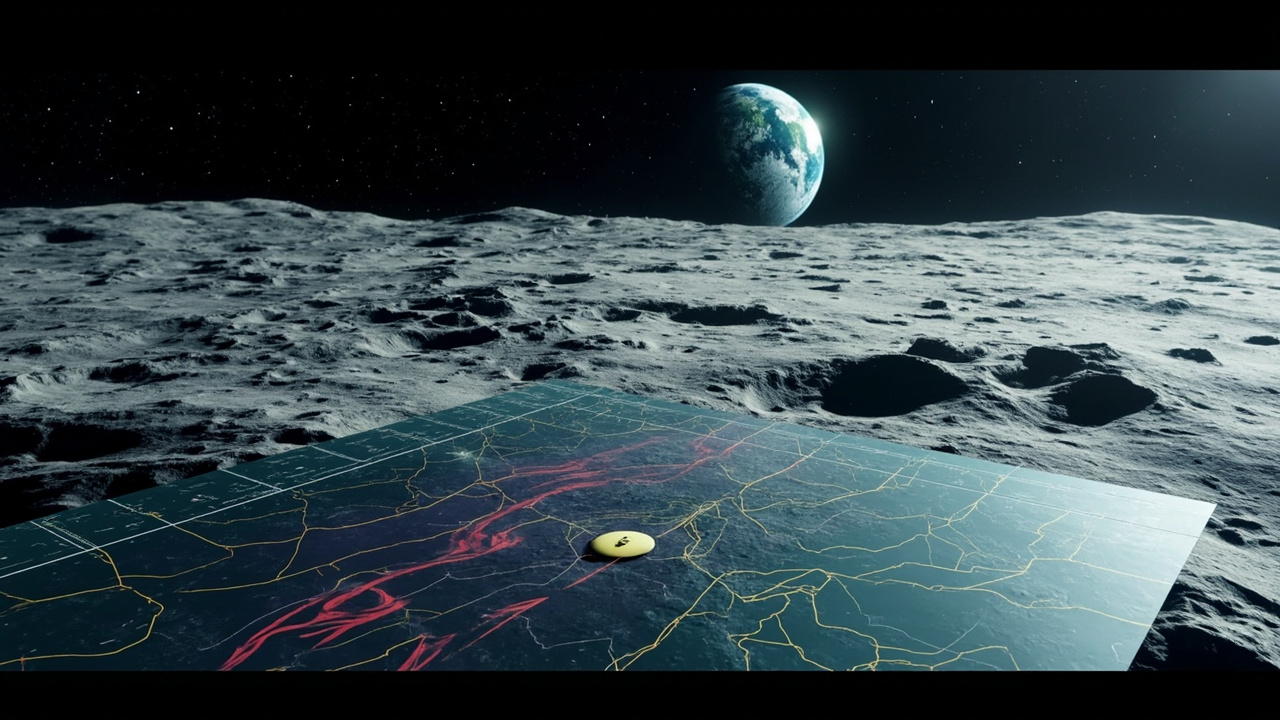
Scientists may have found the first moon lander
Two independent research teams say they may have located the long-lost landing site of the Soviet Union’s Luna 9 spacecraft. It was the first human-made object to make a soft landing on the moon, transmitting historic surface images in February 1966.
Its exact resting place has been uncertain for nearly six decades. The spacecraft is about the size of a beach ball, making it difficult to spot in orbital imagery.
The search for a lunar pioneer
On February 3, 1966, Luna 9 touched down in Oceanus Procellarum. Its images proved the lunar surface was solid, not a soft dust trap, paving the way for future crewed missions.
The Soviet Union’s official coordinates for the landing were imprecise, placing it somewhere within a 60-mile (100-kilometer) wide search area. The lander’s unique descent further complicated the search.
As it approached, a spherical capsule wrapped in inflatable shock absorbers was ejected. It bounced before coming to rest and unfolded four petal-like panels, while the heavier descent stage crashed nearby.
A crowdsourced hunt and an AI assistant
One candidate site was identified through a public, crowdsourced effort led by science communicator Vitaly Egorov. By comparing Luna 9’s original 1966 panoramas with modern orbital data from NASA’s Lunar Reconnaissance Orbiter (LRO), his team aligned distant hills and boulders.
This method pinpointed a candidate location roughly 15 miles (25 kilometers) from the historically reported coordinates.
A second team, led by researcher Lewis Pinault, used artificial intelligence. They trained a machine-learning model on LRO images of well-documented Apollo landing sites.
- The model successfully identified hardware at the Apollo 17 site in unseen images.
- It also independently located the Soviet Luna 16 landing site.
- When applied to the Luna 9 region, it flagged a cluster of features about 3 miles (5 kilometers) from the old coordinates.
"The machine is tireless," Pinault told Space.com. "It can look at a lot of images and just pause and say, 'This is different.'" The AI detected subtle combinations of regolith disturbance and shadows that humans might miss.
The proof may come from India
Researchers hope new imagery will provide definitive proof. India’s Chandrayaan-2 orbiter is scheduled to pass over the region in March.
Its camera is capable of capturing sharper views than LRO. "I believe the camera will... actually get a definitive view of the site," said Pinault. The key will be resolving the lander’s distinctive petal-like panels.
NASA’s upcoming Artemis 2 mission will not help. The Orion spacecraft will pass thousands of miles above the surface, far too distant to spot an object as small as Luna 9.
AI and the future of lunar archaeology
The search for Luna 9 demonstrates how AI could help monitor the moon’s growing collection of human artifacts. With NASA’s Artemis program, China’s lunar ambitions, and increasing commercial missions, the surface is accumulating more hardware.
AI systems could eventually operate onboard spacecraft to catalog equipment and track disturbances in real time. "There's good science here," said Pinault.
For now, the focus is on a metallic flower that bloomed on the moon in 1966. If Chandrayaan-2’s camera confirms its shape, a six-decade mystery will finally be solved.
Related Articles

Reliance Jio to invest $110 billion in AI datacenters over seven years
Reliance Jio plans to invest $110 billion in AI datacenters over seven years, aiming to make AI services as affordable as it made mobile data in India.

Study: AI Chatbots Make Users 76% More Likely to Misdiagnose
A study shows LLM chatbots give unreliable medical advice. In tests, people using AI were less likely to correctly diagnose conditions than those not using AI. Issues include users omitting key details and chatbots giving inconsistent or incorrect information.
Stay in the loop
Get the best AI-curated news delivered to your inbox. No spam, unsubscribe anytime.