
Two new biographies reclaim philosopher Alexandre Kojève
Summary
Two new biographies restore philosopher Alexandre Kojève, famous for his "end of history" idea, as a father of postmodern thought. They explore his life and work, separating his complex ideas from later misinterpretations and highlighting his relevance to modern bureaucratic and automated existence.
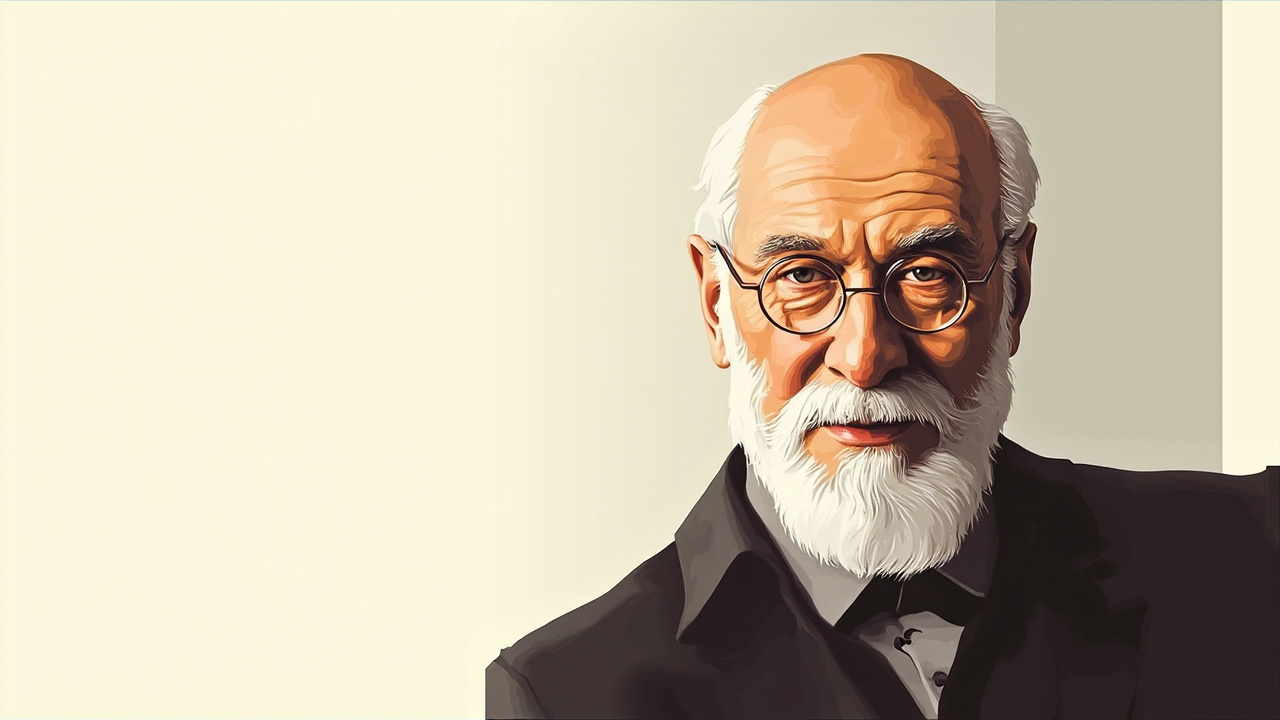
Two new books resurrect a postmodern prophet
Two major intellectual biographies of the philosopher Alexandre Kojève have been published in English this year, rescuing his thought from decades of rumor and misinterpretation. Marco Filoni’s The Life and Thought of Alexandre Kojève and Boris Groys’s Alexandre Kojève: An Intellectual Biography approach the thinker from distinct angles, establishing him as a radical contemporary rather than just an influence on figures like Jacques Lacan.
Both authors argue Kojève was the unacknowledged father of postmodernism. He captured the soul-crushing experience of late capitalism—its endless bureaucracy, automated systems, and exhausted resources—decades before it became our daily reality.
The end of history was not a triumph
Kojève is most famous for declaring the “end of history,” a concept famously co-opted and distorted by Francis Fukuyama in the 1990s. In The End of History and the Last Man, Fukuyama linked it to the fall of the Soviet Union and the victory of liberal democracy.
This was a “violent misreading,” according to the new biographies. Kojève’s original idea, formulated in the 1930s and 40s, was deeply ironic and not a celebration of capitalism. His view was shaped by his youth in Soviet Russia, his reading of Hegel through Marx, and his later involvement with leftist Eurasianist circles and the French Resistance.
For Kojève, the end of history meant an eternal present of administration without humans. He was never sure of its exact start date, variously suggesting Napoleon, Stalin, or the Japanese snob practicing the tea ceremony.
A life of diamonds, cheese, and narrow escapes
Kojève’s life was as bizarre as his philosophy. Born Aleksandr Kozhevnikov in Moscow in 1902, his uncle was the painter Wassily Kandinsky. He fled Russia after the Bolsheviks arrested him for black-market soap trading.
Filoni reveals that Kojève’s uncle was Lenin’s personal physician, a connection that may have saved his life. He financed a lavish life in 1920s Berlin with smuggled jewels, studied an astonishing range of subjects, and lost his remaining fortune investing in the French cheese company La Vache qui Rit after the 1929 crash.
Broke and in need of work, he took over a seminar on Hegel in Paris. That seminar, which ran from 1933 to 1939, became legendary. It was attended by a who’s-who of future French intellectuals, including:
- Jacques Lacan
- Georges Bataille
- Raymond Queneau
- André Breton
- Maurice Merleau-Ponty
Jean-Paul Sartre learned his Hegel through Kojève’s students. The seminar’s notes were later published as Kojève’s only major lifetime work, Introduction to the Reading of Hegel.
The philosopher as a bureaucratic double agent
During World War II, Kojève operated in a shadowy space between the French Resistance, the Vichy regime, and the Soviet embassy. He once sent a 1,000-page manuscript addressed to Stalin himself.
Filoni details how Kojève narrowly escaped execution by charming a Gestapo officer with his flawless German. This talent for navigating complex bureaucracies foreshadowed his postwar career as a senior French economic diplomat, where he helped negotiate:
- Greek tobacco imports
- Aspects of Algerian independence
- The foundational treaties of the European Union
He described himself paradoxically as “Stalin’s conscience,” a right-wing Marxist, or a left conservative. Thought and action were inseparable for him; his government work was philosophy by other means, an attempt to shape the “end state” of history.
Negativity, nothingness, and not being human
At the core of Kojève’s philosophy is the concept of negativity. Groys argues that for Kojève, humans are “holes in the world,” defined by a lack of fixed identity. Our desire for recognition sparks the famous master-slave struggle.
Kojève was obsessed with what remains of the human after history ends. The answer, increasingly, is nothingness. Groys writes that in post-history, “the anti-consumerist, ascetic lifestyle becomes the revelation of nothingness as the only content of human existence.”
True freedom meant overcoming the human condition itself. As Kojève wrote, citing Brecht, being human is to not want to be human anymore. This overcoming is the final “negation of the negation” that truly ends history.
Two biographies, two distinct diamonds
Together, these books excavate a thinker who deliberately obscured his legacy. Kojève was “a philosopher who wrote but not a writer who published.” He referred to his unpublished manuscripts as his posthumous work, to be released only after his death in 1968.
Filoni’s book, first published in Italian in 2008 and now revised, is the scholarly gold standard. It emerges from decades of work with Kojève’s vast archives and is packed with footnotes and biographical detail. Filoni captures Kojève’s essential cheekiness, emphasizing that reading him is fun and he should not always be taken literally.
Groys’s book is different. It is less a conventional biography and more a creative, personal interpretation that says as much about Groys as about Kojève. It draws heavily on Russian religious thought, particularly the “Sophiology” of Vladimir Solovyov, to present Kojève as a thinker for the masses.
Groys gives Kojève’s aesthetics—developed with his uncle Kandinsky—a central role. In this view, art after history’s end does not represent things but their essential nothingness, which is beauty itself. Art becomes a tool to reveal this nothingness and change the world.
Where Filoni provides the definitive life, Groys liberates the thought from Fukuyama’s shadow and reinvents it for today. They uncover, as the reviewer notes, two facets of a long-buried diamond.
Related Articles
Google's emissions surge 50% in five years due to AI data centers
Michael Pollan's new book examines consciousness, which he says is under threat, on personal and technological levels.

The Loved One becomes first Philippine hit of 2026 after crossing PHP100M box office
The Loved One, starring Anne Curtis and Jericho Rosales, is the first local 2026 Philippine hit, grossing PHP110M in nine days despite discounted tickets.
Stay in the loop
Get the best AI-curated news delivered to your inbox. No spam, unsubscribe anytime.