
U.S. assembling largest Middle East air presence since 2003 Iraq invasion
Summary
The US is building up forces near Iran, risking a conflict with unpredictable outcomes like regime change, retaliation, or regional chaos.
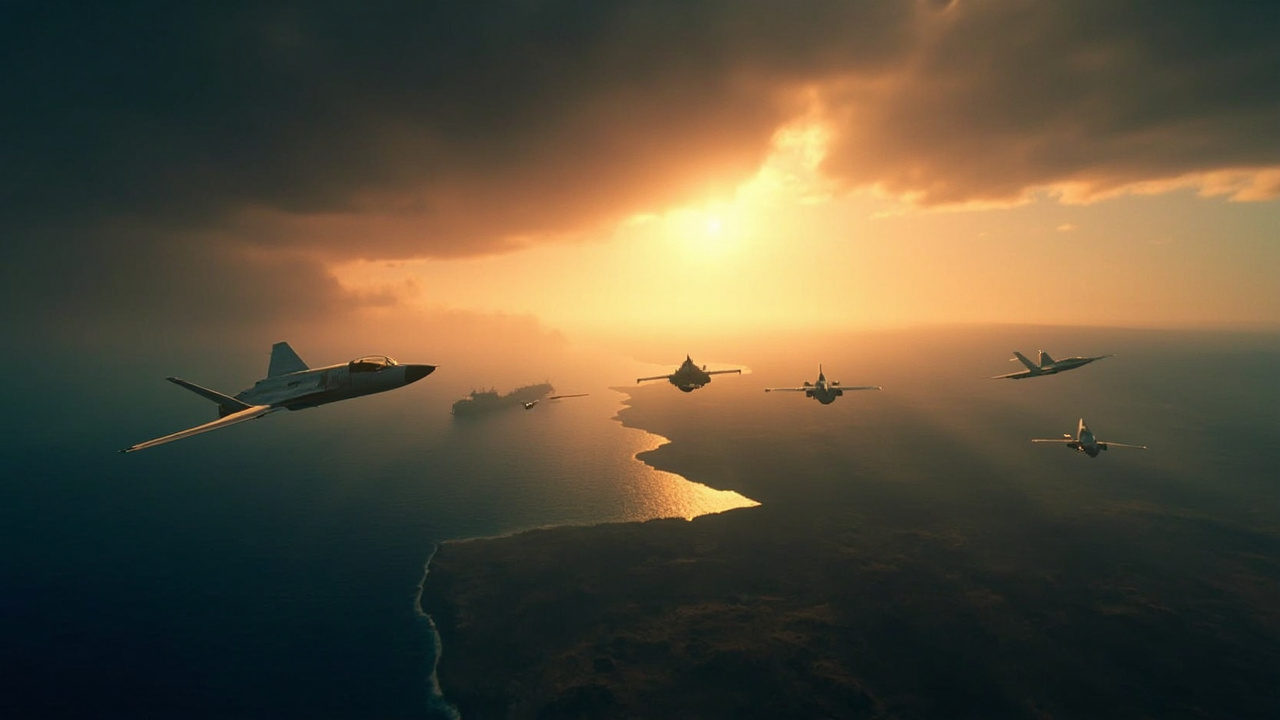
US poised for major military strike on Iran
The United States appears poised to launch a military strike against Iran. Washington has been building up forces in the Middle East for weeks and is now set to assemble its largest regional air power presence since the 2003 invasion of Iraq.
This could still be a bluff to pressure the Iranian regime into an unwanted deal. America's Gulf Arab allies have reportedly cautioned against an attack due to the risk of unintended consequences.
Possible outcomes of a US attack
If negotiations fail and President Donald Trump orders an attack, the outcomes are unpredictable. The most likely initial action would be limited, precision strikes by US air and naval forces.
Potential targets include:
- Military bases of Iran's Islamic Revolutionary Guards Corps (IRGC)
- Bases of the Basij paramilitary force
- Ballistic missile launch and storage sites
- Iran's nuclear programme facilities
Regime change is an optimistic scenario
One potential result is the toppling of Iran's already weakened regime, leading to a democratic transition. This is a highly optimistic view, given the chaos that followed Western interventions in Iraq and Libya.
Another possibility is the "Venezuelan model," where powerful US action leaves the regime intact but forces policy changes. This would mean the Islamic Republic survives but is forced to curtail support for regional militias, cease its nuclear and ballistic missile programs, and ease suppression of protests.
This outcome is also considered unlikely. The leadership, especially Supreme Leader Ayatollah Ali Khamenei, has remained defiant and resistant to change for 47 years.
Regime survival is the most likely result
Many analysts believe regime survival is the most probable outcome. While the regime is unpopular and weakened by successive protests, a pervasive security apparatus with a vested interest in the status quo remains.
The IRGC is deeply involved in Iran's economy. The regime has prevented overthrow by allowing no significant defections and being prepared to use unlimited force to stay in power.
In the confusion following US strikes, Iran could end up ruled by a strong military government composed largely of IRGC figures.
Iran vows retaliation for any attack
Iran vowed last month to retaliate against any US attack, with Ayatollah Khamenei promising to deliver "a slap in the face" to US forces. While no match for the full might of the US Navy and Air Force, Iran could lash out with its arsenal.
Its capabilities include:
- Ballistic missiles and drones concealed in caves or remote mountainsides
- The ability to target US bases in Bahrain, Qatar, and other Gulf states
- Potential strikes on critical infrastructure in nations like Jordan or Israel if deemed complicit
The 2019 missile and drone attack on Saudi Aramco facilities showed how vulnerable the region is. Iran's Gulf Arab neighbors are extremely jittery that any US action will rebound on them.
Threat to global shipping and oil
A major threat is the closure of the Strait of Hormuz, a critical chokepoint for global energy supplies. Around 20% of the world's Liquified Natural Gas and 20-25% of global oil passes through this narrow strait each year.
Iran recently closed the Strait for a few hours to conduct live-fire drills—the first closure since the 1980s. It has also conducted exercises in rapidly deploying sea mines and held joint drills with Russian sailors.
Mining the strait would impact world trade and oil prices. The biggest losers would be Iran itself, which relies on oil exports for revenue, and its principal customers in Asia, notably China.
The danger of a "swarm attack"
A US Navy Captain in the Gulf once identified his greatest fear as an Iranian "swarm attack." This involves launching so many explosive drones and fast torpedo boats that US defenses cannot eliminate them all in time.
The IRGC Navy, which has replaced the conventional Iranian Navy in the Gulf, focuses on unconventional "asymmetric" warfare to bypass US technical advantages. The sinking of a US warship or capture of its crew would be a massive humiliation.
While considered unlikely, the USS Cole was crippled by a suicide attack in 2000, and the USS Stark was mistakenly hit by Iraqi missiles in 1987.
Risk of regional chaos and civil war
A major concern for neighbors like Qatar and Saudi Arabia is the risk of Iran descending into civil war, similar to the conflicts in Syria, Yemen, and Libya. Ethnic tensions among Kurds, Baluchis, and Azerbaijanis could spill into armed conflict amid a nationwide power vacuum.
While much of the Middle East would be glad to see the end of the Islamic Republic, no one wants to see a nation of 93 million people descend into chaos, sparking a humanitarian and refugee crisis.
The greatest danger is that President Trump, having amassed a powerful force, feels he must act or lose face. A war could begin with no clear end-state and with unpredictable, damaging repercussions for the entire region.
Related Articles
Hamas holds election for new interim leader, source tells BBC
Hamas is electing a new interim leader. Khaled Meshaal, a pragmatic "old guard" figure, is a frontrunner. The choice will signal Hamas's direction amid post-war talks and internal shifts after senior leaders were killed.
Kobbie Mainoo on academy pride and his 'ultimate role' in new BBC series
New BBC series "The Football Interview" launches with Man Utd caretaker boss Michael Carrick. He discusses his success, faith in young talent like Kobbie Mainoo, and his future, calling the role "the ultimate."
Stay in the loop
Get the best AI-curated news delivered to your inbox. No spam, unsubscribe anytime.