
Dim indoor light, not screens, may be driving myopia surge
Summary
Myopia may be caused by insufficient light reaching the retina during sustained close-up work in dim indoor lighting, not screens alone.
Myopia may be caused by dim light, not screens
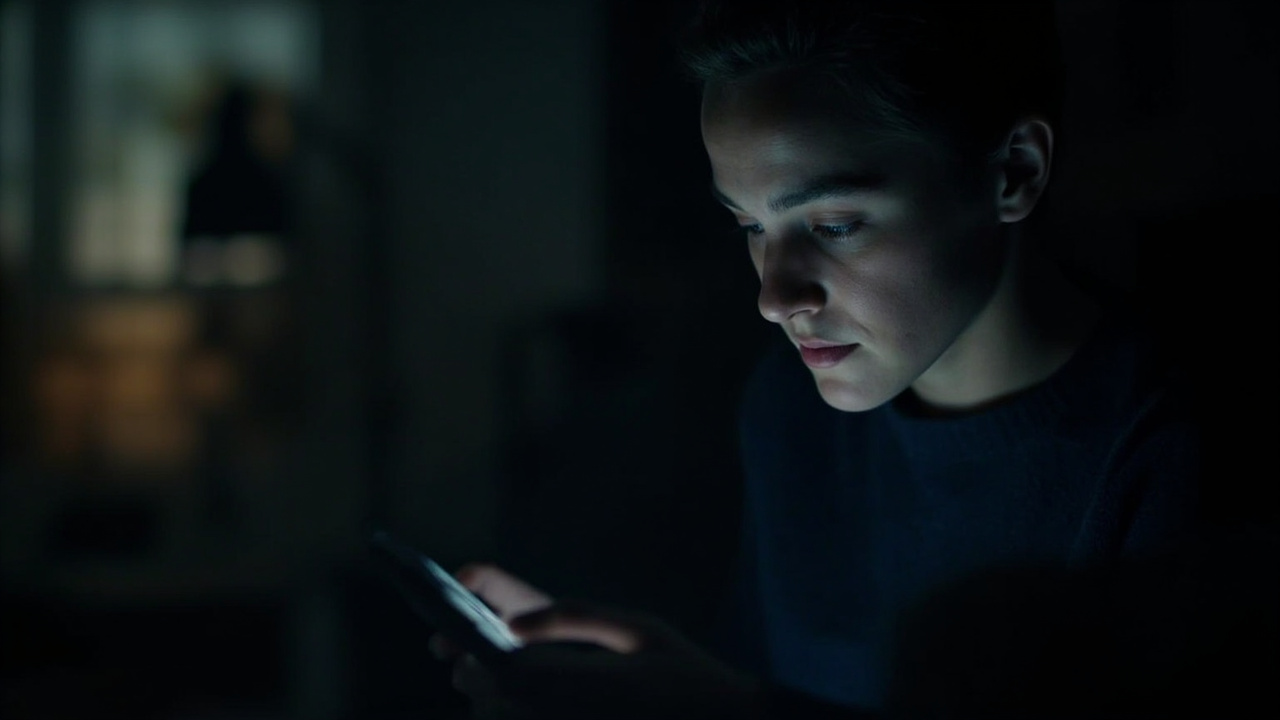
Myopia, or nearsightedness, may be driven less by screen time and more by a common indoor behavior: doing close-up work in dim lighting. That's the conclusion of a new study from scientists at the SUNY College of Optometry, scheduled for publication in Cell Reports.
The research proposes a new, unified theory. It suggests that when people focus on close objects like phones or books in low light, their pupils constrict to sharpen the image. This dual effect—dim ambient light plus a narrowed pupil—can drastically reduce the amount of light hitting the retina.
"Our findings suggest that a common underlying factor may be how much light reaches the retina during sustained near work—particularly indoors," said senior study author Jose-Manuel Alonso, a SUNY Distinguished Professor.
A global rise in nearsightedness
Myopia causes distant objects to appear blurry and has seen a dramatic global increase. It now affects nearly 50 percent of young adults in the United States and Europe and close to 90 percent in parts of East Asia.
While genetics play a role, the speed of the rise points to powerful environmental factors. "Myopia has reached near-epidemic levels worldwide, yet we still don't fully understand why," Alonso said.
Current treatments to slow progression are varied and seem to work through different mechanisms. They include:
- Multifocal contact lenses
- Low-dose atropine eye drops
- Lenses that reduce contrast
- Spending more time outdoors
The new study offers a hypothesis that could link all these methods under a single biological explanation.
The mechanics of light and focus
The theory centers on retinal illumination. In bright outdoor light, the pupil constricts to protect the eye but still lets in ample light. When focusing on something close indoors, the pupil also constricts to sharpen the image, a process called accommodation.
"In dim lighting, this combination may significantly reduce retinal illumination," explained lead researcher and doctoral student Urusha Maharjan.
The researchers propose that myopia develops when the retina doesn't get enough light during sustained close-up work. In contrast, bright outdoor light causes the pupil to constrict due to brightness alone, maintaining healthier retinal stimulation.
How treatments might work
The study found that negative lenses, used to induce myopia in lab animals, also decrease retinal light by triggering accommodative pupil constriction. This effect worsens with shorter viewing distances, stronger lenses, and in eyes that are already myopic.
This mechanism could explain why various treatments help. They may all work by increasing the light that reaches the retina or reducing the pupil constriction caused by close focus.
The theory suggests effective myopia control requires:
- Maintaining exposure to bright light
- Limiting the pupil constriction from accommodation
Treatments like multifocal lenses lower accommodative demand. Atropine drops paralyze the muscle that constricts the pupil. Time outdoors allows the eye to relax its focus while being bathed in bright light.
Critically, the researchers warn any treatment may be less effective if people continue prolonged close-up work in dim indoor settings.
A new direction for research
The authors emphasize this is a hypothesis that needs validation. "This is not a final answer," Alonso said. "But it offers a testable hypothesis that reframes how visual habits, lighting, and eye focusing interact."
The theory is grounded in measurable physiology and attempts to connect many disparate pieces of existing evidence. It provides a new framework for designing prevention strategies and evaluating treatments.
"More research is needed," Alonso concluded, "but it gives us a new way to think about prevention and treatment." The study was conducted in Alonso's laboratory at the SUNY College of Optometry.
Related Articles
Playing Tetris reduces trauma flashbacks, study finds
Playing Tetris can reduce trauma flashbacks by occupying the brain's visual processing, with symptoms fading after six months, new research finds.
Beef jerky tops munchies study as preferred snack for cannabis users
Study found beef jerky was the top snack after vaping cannabis, surprising researchers.
Stay in the loop
Get the best AI-curated news delivered to your inbox. No spam, unsubscribe anytime.