Kennedy's vaccine-autism push divides GOP lawmakers
Summary
HHS Secretary RFK Jr.'s focus on autism and vaccines divides Republicans. Some see it as harmful misinformation, while others welcome the increased attention and research funding.
Kennedy's autism focus splits Republicans
One year into his term, Health and Human Services Secretary Robert F. Kennedy Jr. is dividing Capitol Hill Republicans with his intense focus on autism. His push to investigate debunked links to vaccines is creating a stark policy rift within the party.
Some GOP lawmakers warn his approach is counterproductive and risks eroding public trust in health institutions. Others argue any increased attention on autism is beneficial, pointing to recent boosts in federal research funding.
Unproven theories drive policy
Kennedy vowed to quickly find autism's root cause upon taking office. While that hasn't happened, he has promoted several actions based on unproven ties to the condition.
He has warned the public against using Tylenol during pregnancy or giving it to babies. His department also ended the use of the preservative thimerosal in large-batch vaccines. In January, he overhauled the federal autism advisory committee, replacing all public members with his own picks.
- Several new appointees have ties to the anti-vaccine community.
- Others support scientifically dubious autism treatments.
GOP critics warn of misinformation
Senior Republicans are openly critical of the secretary's vaccine rhetoric. Senate HELP Committee Chair Bill Cassidy said stirring disproven theories "creates anxiety and a lot of self-recrimination."
Cassidy, who cast a deciding vote to confirm Kennedy, was asked if the secretary has been receptive to his concerns. He shrugged and replied, "look at his actions."
Appropriations Chair Susan Collins, who co-led a major autism funding bill reauthorization in 2024, was also blunt. "I did not think that it was helpful in any way to link it to vaccines, because the scientific evidence does not support such a link," she said.
Some Republicans welcome the focus
Other GOP figures praise the administration's posture. Senator Jim Banks argued both parties should be "thanking the Trump administration" for focusing on stemming the rising autism diagnosis rate.
Representative Christopher H. Smith, a longtime figure in autism policy, called the focus "a breath of fresh air." He praised removing thimerosal from vaccines and spreading out the childhood vaccination schedule.
"If it turns out its not linked to getting vaccinations, OK. But the question should be asked," Smith said.
Autism diagnosis rates are climbing
The debate unfolds against a backdrop of sharply increasing autism diagnoses. A 2022 CDC study found one in 31 eight-year-olds received an autism diagnosis.
More strikingly, diagnosis rates in adults aged 26 to 34 increased by 450 percent from 2011 to 2022, according to a JAMA study. Experts cite two main factors for the rise:
- Improved screening and a widened definition of autism spectrum disorder.
- Likely unknown environmental or social factors that are not yet understood.
Advocates are divided on the impact
The autism advocacy community itself is split. Zoe Gross of the Autism Self Advocacy Network sees Kennedy's push as a political tool. "Its about using us as kind of this talking point to try and undermine public confidence in vaccines," she said.
She called for more federal support programs and for Congress to counter vaccine misinformation.
Judith Ursitti of the Profound Autism Alliance has a more nuanced view. She acknowledges concerns but believes the shake-up could drive needed change, particularly for those with profound autism who are often left out of research and services.
"More of the same, honestly to me, would have been just as devastating," Ursitti said. "Change does need to happen."
Related Articles

Trump pledges to release government UFO files if elected
Trump says he'll release government alien files after accusing Obama of revealing classified info by saying "aliens are real." Obama later clarified he meant statistically likely, not based on secret knowledge.
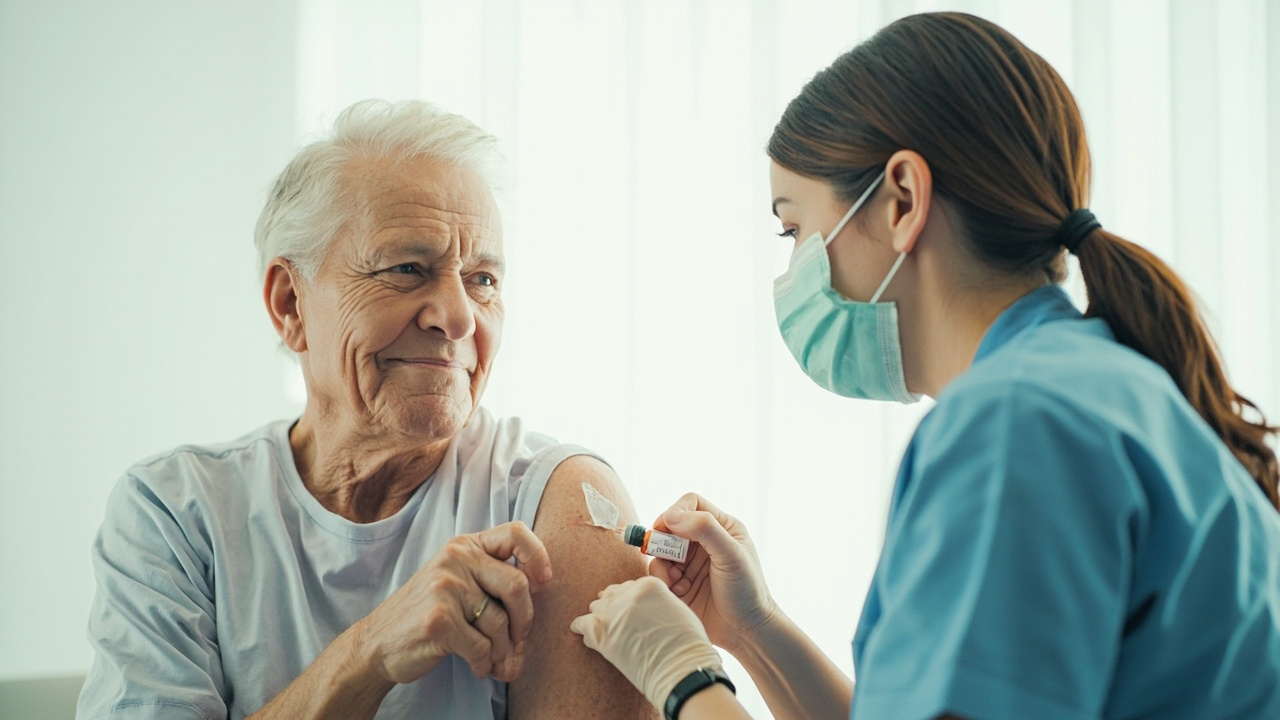
Shingles vaccine cuts dementia risk by 51% in older adults, study finds
A study of seniors found that getting two doses of the shingles vaccine (RZV) was linked to a 51% lower risk of dementia, even after accounting for healthy patient bias.
Stay in the loop
Get the best AI-curated news delivered to your inbox. No spam, unsubscribe anytime.