
Microsoft develops glass data storage to last thousands of years
Summary
Nature's latest issue includes articles on topics like genetically engineered plants, ancient climate clues, and job listings for research positions.
Microsoft creates data storage for millennia
Microsoft researchers have developed a new data storage system designed to last for thousands of years. The project, dubbed Project Silica, uses ultrafast laser optics to store data in quartz glass.
The technology is a radical departure from current methods. It writes information by creating layers of three-dimensional nanoscale gratings and deformations inside a glass disk.
How the glass storage system works
Project Silica stores data by using a femtosecond laser to etch voxels—3D pixels—into a palm-sized slab of fused quartz glass. The system then reads the data back using polarized light and machine learning algorithms to decode the patterns.
This method makes the storage medium incredibly durable. The glass is impervious to water, electromagnetic pulses, and can withstand being baked in an oven or scoured with steel wool without data loss.
The primary goal is to create a sustainable, write-once archive for the world's exponentially growing data. "We are not trying to build a product that competes with hard drives or flash storage," said Ant Rowstron, a principal researcher at Microsoft.
The challenge of long-term archival
Current archival solutions, like magnetic tape, degrade and must be rewritten every few years. This creates significant cost, energy use, and logistical problems for preserving humanity's cultural and scientific records.
Project Silica aims to solve this by creating a truly passive archive. Once data is written to the glass, it requires no energy to maintain and is projected to remain readable for over 10,000 years.
The system has several key advantages for long-term preservation:
- Extreme longevity: Glass does not degrade like magnetic or optical media.
- Physical robustness: It is resilient to environmental damage.
- High density: A single DVD-sized glass platter can currently hold about 7 terabytes, with potential for much more.
- Format obsolescence: The data is stored in a simple, physical format that future civilizations could theoretically decode with basic optics.
From lab to real-world testing
The technology has moved beyond pure research. Microsoft has already stored the 1978 Superman movie and other significant data on the medium. It is now working with the Elire Group on the Global Music Vault project in Svalbard, Norway.
There, glass slides containing music from the UNESCO archive will be sealed in a vault deep inside an Arctic mountain. This serves as a real-world test of the technology's archival promise.
The team is now focused on automating the entire storage and retrieval process. This includes building robotic systems that can fetch, load, and read the glass platters on demand within a large library system.
A future of glass libraries
The vision is for massive, automated libraries filled with racks of glass slides. A robotic arm would retrieve a specific platter, a reader would access the needed data, and the platter would be returned to storage—all without human intervention.
While not for everyday use, this technology could revolutionize how we preserve humanity's most important information. It offers a potential solution for everything from national archives and scientific datasets to corporate records and cultural heritage.
"The biggest cost of storage is not the media," said Rowstron. "It's the electricity and the management." By creating a permanent, passive archive, Project Silica could fundamentally change the economics and reliability of long-term data preservation.
Related Articles

Playing Tetris reduces trauma flashbacks, study finds
Playing Tetris can reduce trauma flashbacks by occupying the brain's visual processing, with symptoms fading after six months, new research finds.
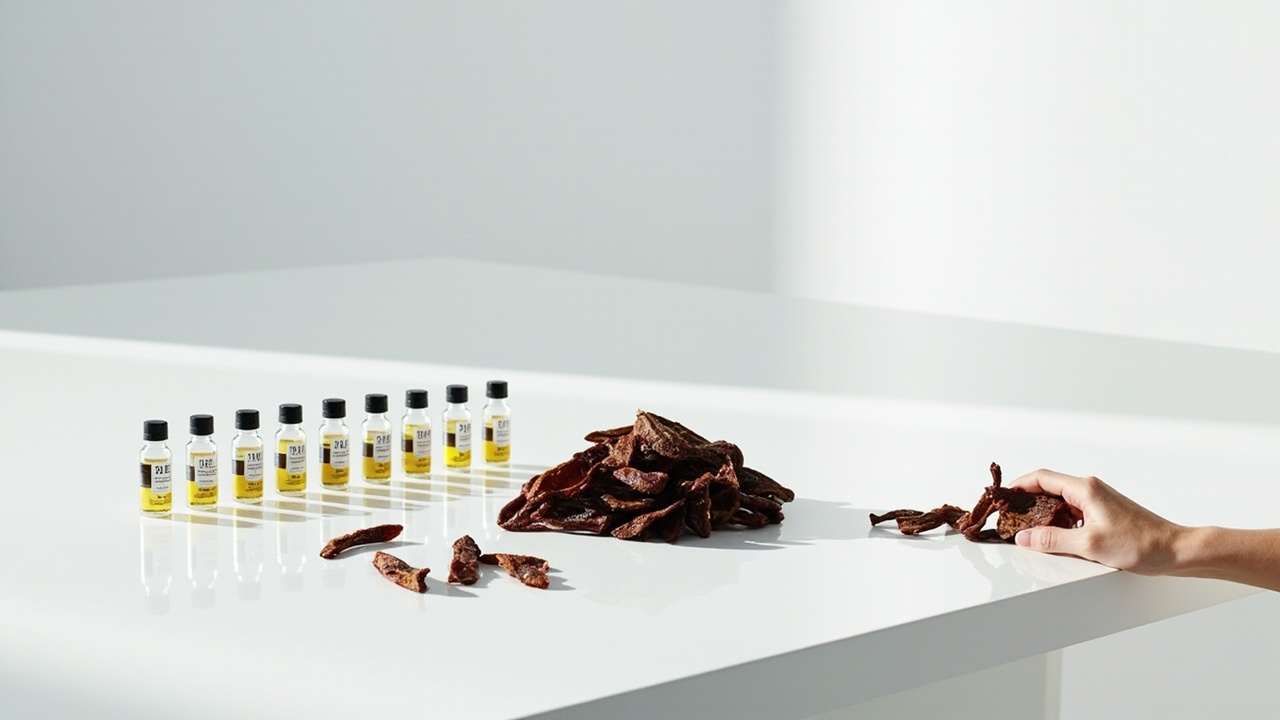
Beef jerky tops munchies study as preferred snack for cannabis users
Study found beef jerky was the top snack after vaping cannabis, surprising researchers.
Stay in the loop
Get the best AI-curated news delivered to your inbox. No spam, unsubscribe anytime.