
MIT: Microbes used oxygen 500 million years before atmosphere had it
Summary
MIT researchers found evidence that some microbes evolved to use oxygen hundreds of millions of years before it became abundant in Earth's atmosphere, potentially delaying the Great Oxidation Event.
MIT finds evidence of oxygen use before Earth's great oxidation
Life may have started using oxygen hundreds of millions of years earlier than previously believed, according to new research from MIT. The study suggests some microbes evolved the ability to perform aerobic respiration long before oxygen became a stable part of Earth's atmosphere.
This discovery could help solve a long-standing mystery: why oxygen took so long to accumulate after the microbes that produce it first appeared.
The great oxidation delay
Oxygen permanently entered Earth's atmosphere about 2.3 billion years ago during the Great Oxidation Event (GOE). However, the first oxygen-producing cyanobacteria are estimated to have emerged around 2.9 billion years ago.
This left a gap of roughly 600 million years where oxygen was being produced but not building up. Researchers have long theorized that chemical reactions with rocks absorbed the early oxygen. The new MIT work provides evidence that living organisms were also consuming it.
"Our study adds to this very recently emerging story that life may have used oxygen much earlier than previously thought," says study co-author Fatima Husain, a postdoc at MIT.
Tracking a crucial enzyme
The MIT team focused on a specific enzyme essential for aerobic respiration: heme copper oxygen reductases. This enzyme, found in most oxygen-breathing life today, converts oxygen into water.
To determine when it first evolved, the researchers traced its genetic sequence through an evolutionary tree of life. They used fossil evidence to anchor their timeline and estimate when different branches emerged.
The analysis pointed to the enzyme's origins in the Mesoarchean era, between 3.2 and 2.8 billion years ago. This predates the Great Oxidation Event by several hundred million years.
An early oxygen cycle
The findings suggest a primitive oxygen cycle existed long before the GOE. Cyanobacteria in the water produced oxygen as a byproduct of photosynthesis. Nearby microbes, having evolved the oxygen-using enzyme, could then rapidly consume it.
This biological consumption, combined with chemical reactions, likely prevented oxygen from accumulating in the atmosphere for an immense stretch of time. "It shows us how incredibly innovative life is at all periods in Earth's history," Husain says.
The research builds on years of MIT work to reconstruct Earth's oxygenation history. Key pieces of the timeline now include:
- ~2.9 billion years ago: Cyanobacteria evolve oxygen-producing photosynthesis.
- Mesoarchean Era (3.2-2.8 billion years ago): Other microbes evolve the enzyme for aerobic respiration.
- ~2.33 billion years ago: The Great Oxidation Event begins, with oxygen permanently entering the atmosphere.
Filling in the puzzle
The study, published in Palaeogeography, Palaeoclimatology, Palaeoecology, was led by Husain and Gregory Fournier, an associate professor of geobiology at MIT. Other co-authors are from the University of Oregon.
"Considered all together, MIT research has filled in the gaps in our knowledge of how Earth's oxygenation proceeded," Husain says. The work suggests life was not just a passive recipient of an oxygenated world but an active participant in shaping it.
The research was supported in part by the Research Corporation for Science Advancement Scialog program.
Related Articles
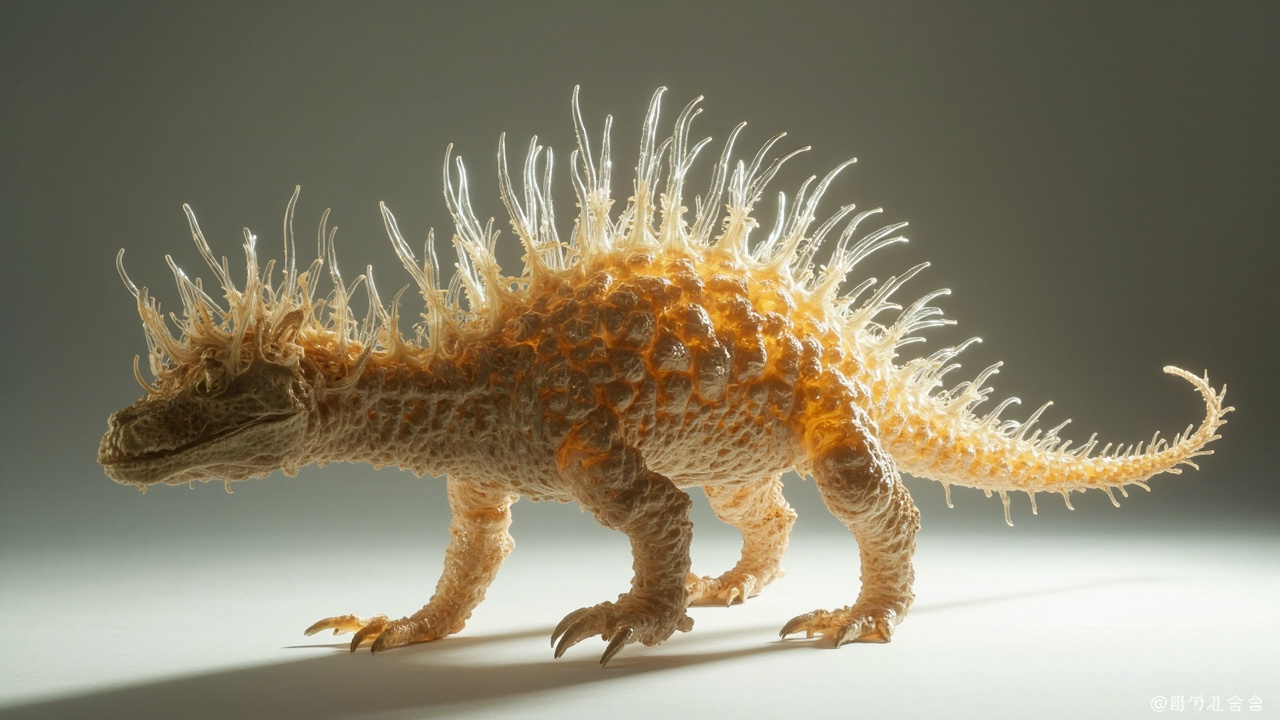
125-million-year-old dinosaur with hollow skin spikes found in China
A new dinosaur species, Haolong dongi, discovered in China has 125-million-year-old preserved skin with unique hollow spikes, a feature never seen before in dinosaurs.
Google's emissions up 48% since 2019, driven by AI data centers
Michael Pollan's book explores consciousness and how psychedelics reveal it as a brain construct, suggesting the future of intelligence may be understood through its evolution.
Stay in the loop
Get the best AI-curated news delivered to your inbox. No spam, unsubscribe anytime.