
Scientists find Panama disease-resistant gene in wild banana
Summary
Scientists found disease resistance in a wild banana, offering hope to protect global supply from a deadly fungus.
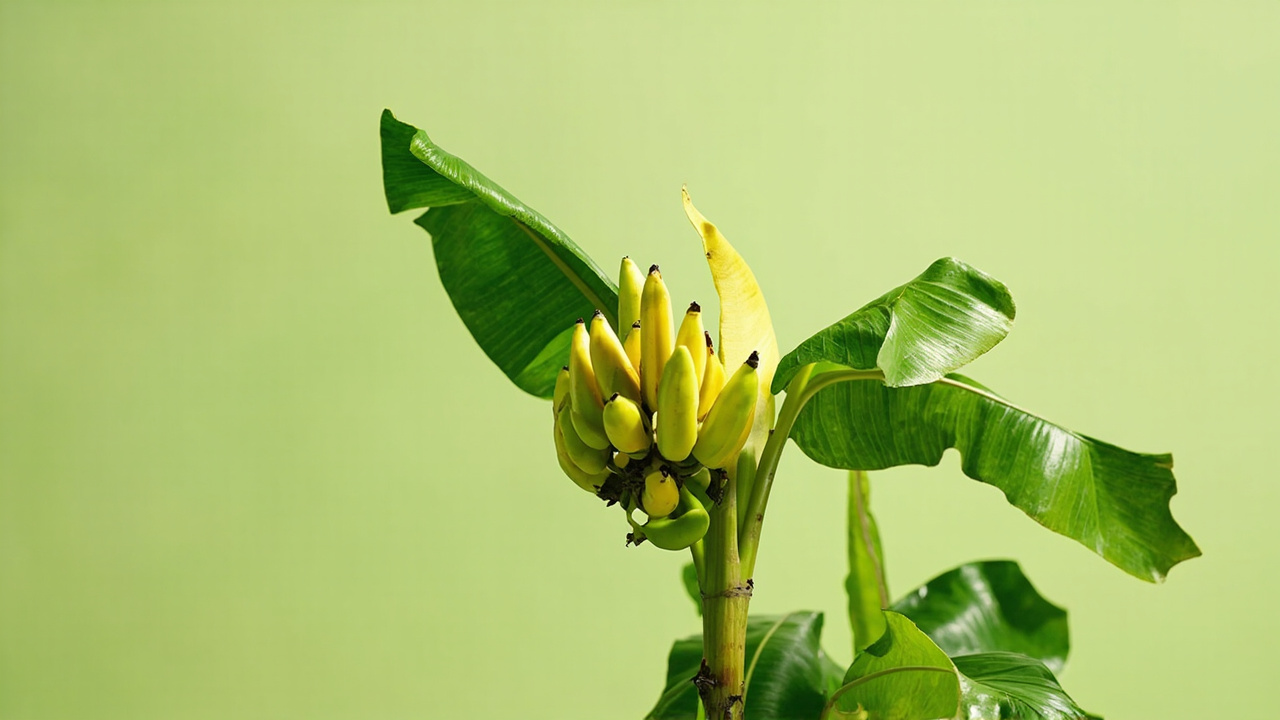
Scientists find disease resistance in wild banana
Researchers have identified a specific genetic region in a wild banana that provides strong resistance to a devastating fungal disease. This discovery offers a new path to protect the global banana supply.
The team from The University of Queensland, led by Dr. Andrew Chen and Professor Elizabeth Aitken, pinpointed the resistance to Fusarium wilt Sub Tropical Race 4 (STR4). This is a destructive strain of Panama disease that threatens the world's primary commercial banana, the Cavendish.
The threat of Panama disease
"Fusarium wilt... is a destructive soil-borne disease which impacts farmed Cavendish bananas worldwide through its virulent Race 4 strains," Dr. Chen said. The fungus attacks the plant's vascular system, causing it to wilt and die.
Once established, the pathogen leaves behind long-lasting contamination in the soil, making fields unusable for future banana crops. Finding natural genetic resistance is considered the only sustainable, long-term solution.
Mapping the resistance gene
The scientists traced the source of resistance to a wild, inedible banana called Calcutta 4. To find the protective trait, they crossed it with susceptible bananas from a different subspecies.
After growing the new plants, they exposed them to STR4 and compared the DNA of survivors with those that became infected. This five-year effort combined several advanced genetic techniques.
- Forward genetics: Population development and disease screening.
- Genome sequencing: Analyzing the plant's complete DNA.
- Bulked segregant analysis: Comparing genetic markers in resistant versus susceptible plants.
The team successfully mapped the STR4 resistance to a specific location on chromosome 5 in the Calcutta 4 banana. "This is a very significant finding; it is the first genetic dissection of Race 4 resistance from this wild subspecies," Dr. Chen said.
The path to a resistant commercial banana
While a breakthrough, the wild Calcutta 4 banana itself is not a commercial solution. "It isn't suitable as a commercial cultivar because it doesn't produce fruit which are good to eat," Dr. Chen explained.
The next critical phase is to turn this genetic insight into a practical tool for breeders. The goal is to develop molecular markers that can track the resistance trait in young seedlings.
This would allow breeders to screen plants early and accurately, long before disease symptoms appear. The process would speed up selection, reduce costs, and ultimately aim to produce a banana that is both good to eat and naturally protected.
Funding and future impact
The research was funded by Hort Innovation using banana industry levy funds and contributions from the Australian Government. The findings are expected to guide future investments to translate the discovery into breeding tools for industry adoption.
STR4 affects subtropical banana-growing regions globally. It is a genetic variant of the even more widespread Tropical Race 4 (TR4), which is also found in Australia.
The study's results are published in the journal Horticulture Research.
Related Articles

First cat cancer genetic map reveals mutations shared with humans
Cat cancer genetics study reveals similarities to human cancers, offering new treatment insights for both species.

AI maps gene control networks driving Alzheimer's disease
UCI researchers used a new machine learning tool, SIGNET, to create detailed maps of cause-and-effect gene interactions in Alzheimer's-affected brain cells, revealing key regulatory genes and pathways that drive the disease.
Stay in the loop
Get the best AI-curated news delivered to your inbox. No spam, unsubscribe anytime.