
South Africa declares foot-and-mouth disease a national disaster
Summary
South Africa faces a national disaster as foot-and-mouth disease spreads across most provinces, devastating cattle herds and farmers' livelihoods. The government is criticized for its response and is now importing vaccines.
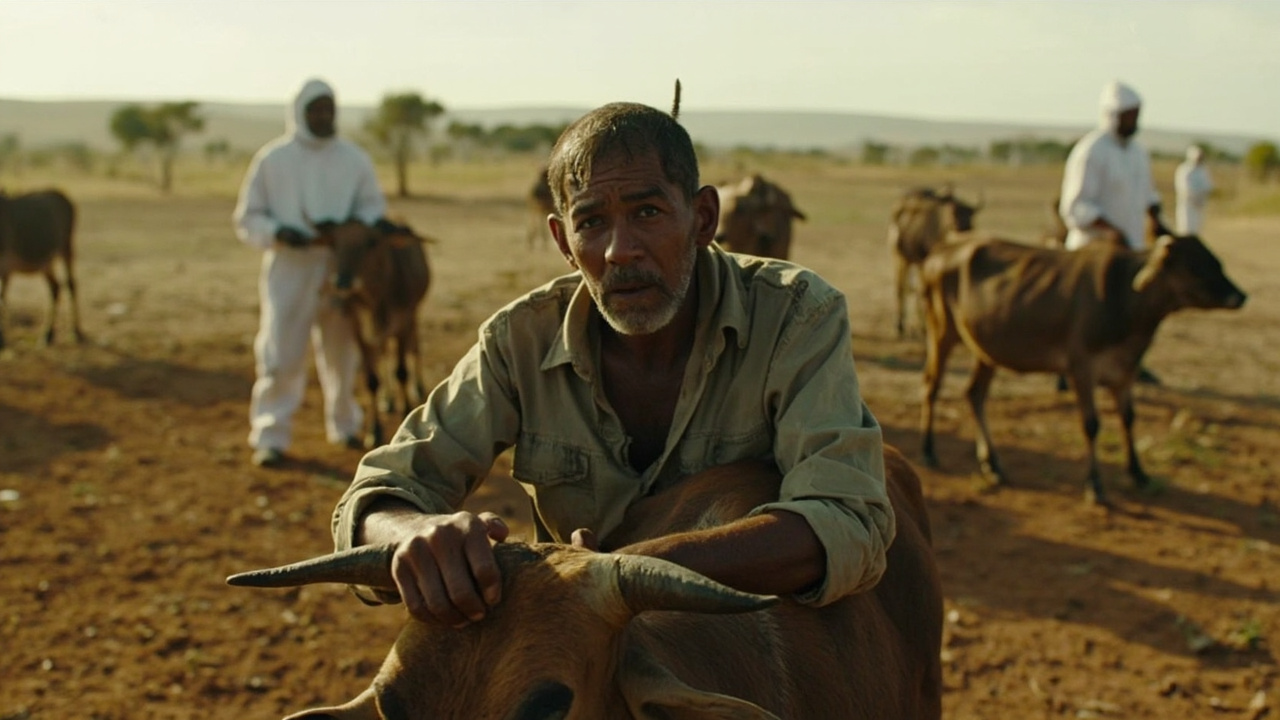
Foot-and-mouth outbreak declared a national disaster
A foot-and-mouth disease outbreak has been declared a national disaster in South Africa. The highly contagious virus has now spread to eight of the country's nine provinces over the past year, devastating cattle herds and crippling a key rural industry.
The virus causes painful blisters in the mouths and on the hooves of livestock, leading to lameness, reduced milk yields, and death in young animals. While not harmful to humans, its economic impact is severe, as countries halt imports of South African animal products.
Farmers blame government for failed containment
In KwaZulu-Natal, the heart of South Africa's dairy industry, biosecurity measures like disinfection points and cattle movement restrictions have failed to stop the spread. Large commercial farmer Carol Houston saw her herd of 2,200 cattle become infected last month.
"We did all we could to keep the disease out," Houston told the BBC. Her farm's milk output plummeted from 14,000 litres per day to 9,000 litres within days as infected cows ate less and struggled to produce.
Houston and other farmers, like Peter Griffin, squarely blame the government for the crisis. "The problem is it's a catastrophe that could've been avoided," Griffin said. "The state has failed us."
A vaccination strategy faces major delays
Agriculture Minister John Steenhuisen has announced a long-term strategy to eradicate the disease within a decade. The short-term plan involves mass vaccination in the worst-affected areas before extending to the majority of the national herd, estimated at 14 million animals.
Farmers are deeply skeptical of the timeline. Promised vaccine shipments have repeatedly failed to arrive. "We were told we would have the vaccine in January... February... It's very frustrating," Houston said.
For small-scale farmers like Nompumelelo Ndlovu, who relies on buying and selling about 20 cattle, any delay is catastrophic. "My biggest fear is if the vaccine doesn't arrive on time, all my cattle will be at risk and that would be the end of my business," she said.
South Africa must import crucial vaccines
President Cyril Ramaphosa's disaster declaration allows the government to release extra funds and speed up vaccine acquisition. This is critical because South Africa lacks the capacity to produce the vaccines domestically.
According to Minister Steenhuisen's party, the Democratic Alliance, a lack of investment and lost technical expertise ended local agricultural vaccine production more than two decades ago. While domestic production is planned to restart, it will not happen quickly.
The immediate solution is imports. A million vaccines are due to arrive from Argentina this weekend, but that number is insufficient for the entire national herd. Their distribution will be another logistical challenge.
The stakes for the livestock economy
The outbreak threatens a vital sector. Agriculture is a key employer in rural areas and normally provides crucial foreign exchange through meat and livestock exports. The industry is now in limbo, waiting for an effective government response.
Ntuthuko Shezi, head of investment company Livestock Wealth, expressed a cautious hope. "We are hoping that government will get this right in vaccinating the entire herd with speed," he said. "If we could get it right with Covid-19, we surely can with this outbreak."
The key challenges facing the government's response include:
- Securing and distributing enough imported vaccine doses
- Restarting domestic vaccine production for long-term security
- Managing the economic fallout for farmers of all sizes
- Restoring international confidence in South Africa's animal products
Related Articles
Mother of 7-year-old with measles brain swelling says she still wouldn't vaccinate
A 7-year-old boy, unvaccinated against measles, is hospitalized with measles encephalitis, a severe brain complication. His parents, who chose not to vaccinate him, stand by their decision despite the ordeal. This occurs amid a U.S. measles outbreak linked to declining vaccination rates.
FDA sets new limits on livestock antibiotics to curb resistance
FDA sets guidelines for antibiotic use limits in livestock to curb resistance, but critics say it overlooks human health impacts.
Stay in the loop
Get the best AI-curated news delivered to your inbox. No spam, unsubscribe anytime.