
US seeks Greenland military sites for space race advantage
Summary
Trump's interest in Greenland centers on its strategic value for Arctic dominance and space operations, particularly the Pituffik Space Base, highlighting tensions in international space and territorial law.
Trump's Greenland fixation is about space
US interest in Greenland is a serious geopolitical move centered on the island's value for space and military dominance. What began as a seeming oddity in 2019—the idea of the US purchasing Greenland—has evolved into a consistent strategic push from Washington.
Recent reports suggest the US and Denmark have quietly discussed granting the US small, remote patches of Greenland for new military sites. This underscores that the focus is not a joke but a calculated effort to secure a foothold at the crossroads of two frontiers: a warming Arctic and an increasingly contested outer space.
The strategic jewel is Pituffik Space Base
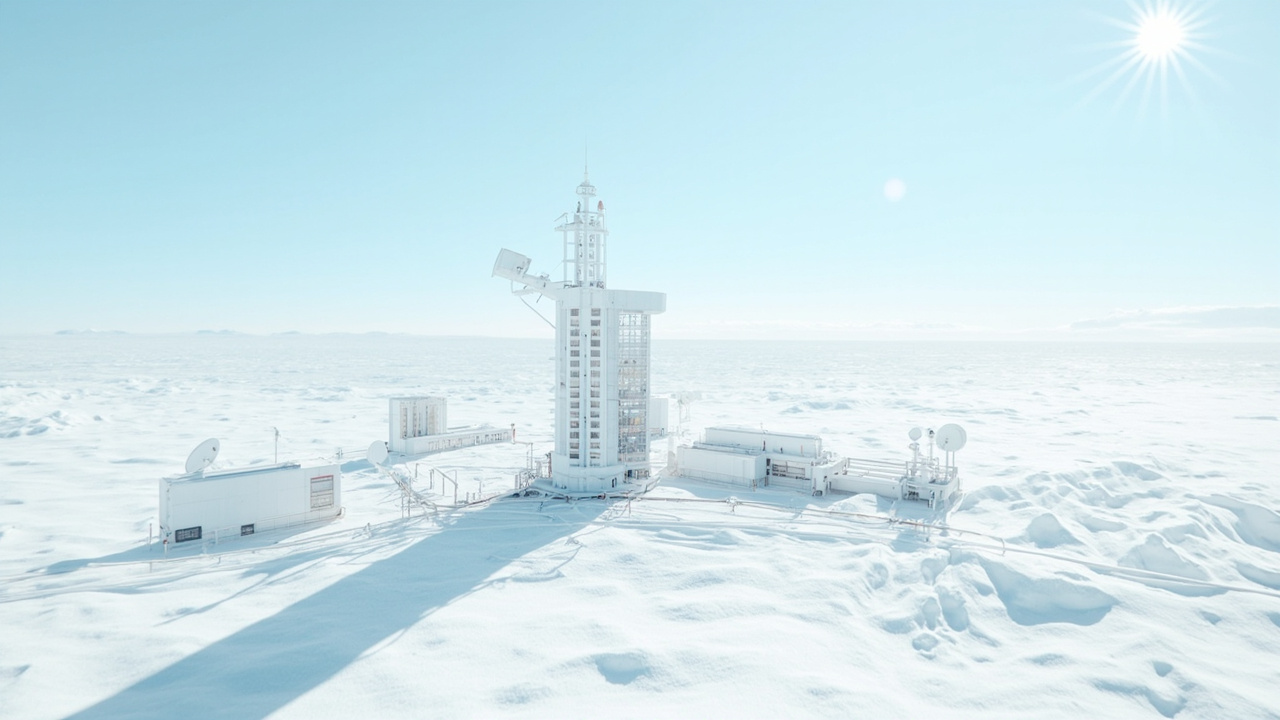
At the center of this push is Pituffik Space Base, formerly known as Thule Air Base. This Cold War outpost is now a cornerstone of the US Space Force. It is vital for missile detection, satellite tracking, and climate monitoring.
Former President Donald Trump has repeatedly praised the base as one of America's most important assets for watching space. His administration's message has been clear: Greenland is central to US ambitions in both the Arctic and the orbital domain.
In a world where orbit is the new military high ground, the persistent surveillance enabled by Pituffik is strategic gold. Controlling such a site grants a disproportionate advantage in monitoring global satellite traffic and missile launches.
Greenland is a potential Arctic launch hub
The interest extends beyond surveillance. Greenland's geography offers prime conditions for rocket launches. Its high latitude is ideal for placing satellites into polar and sun-synchronous orbits, which are crucial for Earth observation.
The island's empty expanses and open ocean corridors make it a potential hub for Arctic space launches. This is increasingly valuable as global launch capacity tightens due to fewer available sites and geopolitical access problems.
Key advantages of Greenland for space operations include:
- Proximity to polar orbital paths
- Vast, unpopulated areas for launch infrastructure
- Open ocean downrange for safer rocket stage disposal
- Strategic location for monitoring the Arctic and North Atlantic
Old space laws are breaking down
This scramble for terrestrial advantage highlights the fragility of the existing international order. The foundational 1967 Outer Space Treaty was designed for a bipolar world with only a few state-owned satellites.
It is ill-equipped to handle today's reality of private mega-constellations, commercial lunar projects, and asteroid mining. Crucially, it never anticipated that control over key Earth-based sites like Pituffik would become a primary determinant of who can monitor and dominate orbit.
As major powers treat orbit less as a global commons and more as a domain to control, core treaty principles are being pushed to the breaking point. The international bodies meant to govern these realms are struggling.
The Arctic Council is paralyzed by geopolitical tensions, and UN committees cannot keep pace with commercial space innovation. National space laws now increasingly prioritize resource rights and strategic advantage over collective governance.
Greenland is a geopolitical warning sign
Greenland itself has become a pressure gauge for this fraying legal order. For the island's people, its strategic value provides leverage but also profound vulnerability. They must navigate the ambitions of global powers while pursuing their own political future, which includes the possibility of independence from Denmark.
The situation exposes a deeper shift: the Arctic is becoming a front line for space governance. The laws designed to manage this territory and the space above it are failing to keep up with new military and commercial realities.
Pituffik Space Base is no longer just a remote outpost. It is a strategic gateway to orbit and a means to project power from the ground into space. The debate over Greenland is a clear signal that the competition for the final frontier is firmly rooted in territorial control on Earth.
Related Articles

Brendan Fraser, Andrew Scott star in D-Day weather drama 'Pressure' on Apple TV+
A general and a meteorologist must decide whether to launch D-Day despite a dangerous storm, with the fate of WWII at stake.

USS Gerald R. Ford to transit Strait of Gibraltar into Mediterranean
The world's largest nuclear aircraft carrier, the USS Gerald R. Ford, is preparing to transit the Strait of Gibraltar. It is heading to the eastern Mediterranean amid heightened Middle East tensions, as part of a major U.S. military reinforcement.
Stay in the loop
Get the best AI-curated news delivered to your inbox. No spam, unsubscribe anytime.