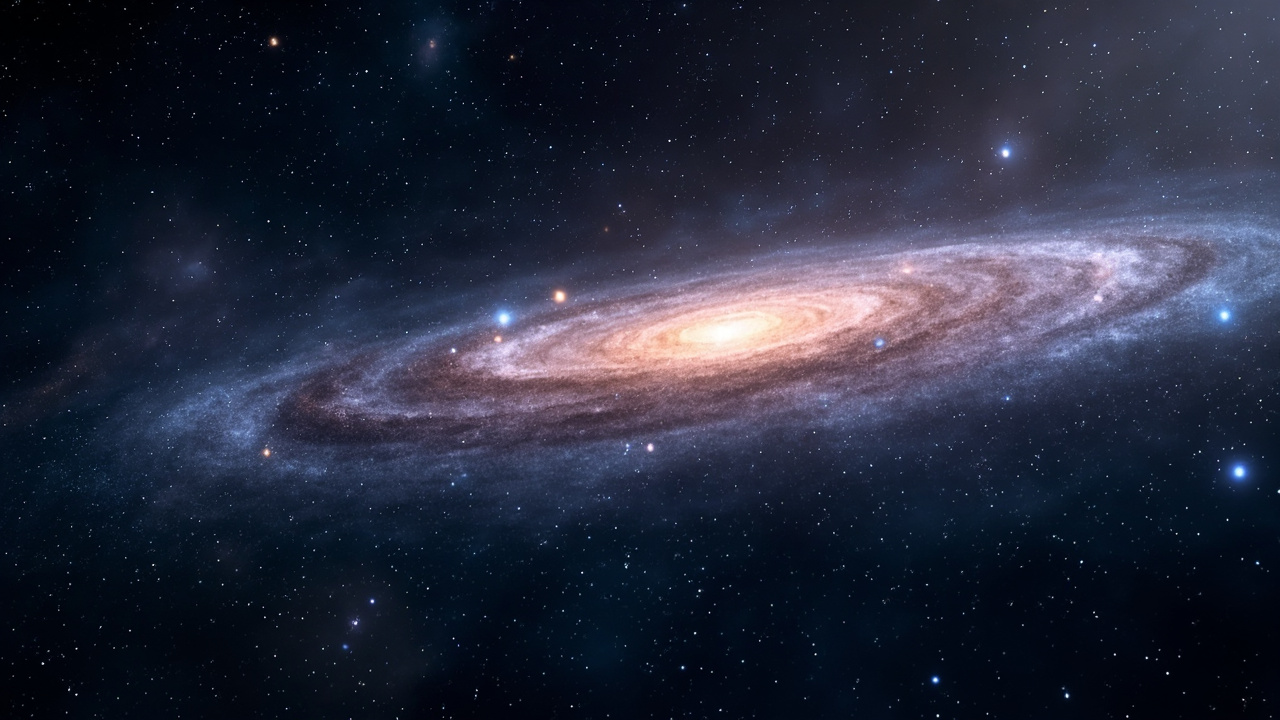
Canon's 18x50 IS binoculars stabilize views of moon, comets, solar eclipses
Summary
Premium stargazing gear like smart telescopes and image-stabilized binoculars offer transformative views, automating finding objects and providing steady, detailed observations of celestial wonders.

Image-stabilized and smart binoculars
Canon's 18x50 IS UD binoculars are a premium choice for eliminating hand shake. At 2.6 pounds, they use internal actuators to freeze celestial objects, allowing for detailed views of the moon, star clusters, and comets. They are particularly powerful for observing the solar corona during a total solar eclipse.
For a slightly more portable option, the Fujinon TS-L 16x40 offers similar stabilization at 16x magnification. Weighing 1.9 pounds, they effectively transform shaky stars into sharp points of light.
The Canon 10x42L IS WP binoculars add all-weather armor and superior L-series glass to the stabilization formula. They provide a wider field of view, making them excellent for sweeping across the Milky Way.
The upcoming Unistellar Envision represents a new category: smart binoculars. These 10x50 Porro binoculars feature an augmented reality overlay that identifies constellations and deep-sky objects. A unique "pin and share" function lets one user mark an object for another to find using on-screen arrows.
Smart telescopes
The Unistellar eVscope 2 combines a 4.5-inch reflector with a built-in camera and a Nikon-made electronic eyepiece. It can capture 7.7-megapixel images and display them on your phone or through the eyepiece, even in light pollution. It also facilitates organized citizen science campaigns.
Celestron's Origin Intelligent Home Observatory is a fully automated system controlled by a mobile app. It locates, tracks, and processes images of galaxies and nebulae within minutes. The recent Mark II version upgraded the sensor, optics, and AI processing.
For portability, the Vaonis Vespera Pro is a compact, 11-pound smart telescope. It auto-aligns in seconds via the Singularity app and can stitch images to create panoramic views wider than its native field.
Designed for urban astronomers, the Unistellar Odyssey Pro is an 85mm reflector that automatically plate-solves to self-align. It live-stacks images directly to your phone or tablet, revealing color in nebulae from a light-polluted balcony.
Smart mounts, trackers and GoTo telescopes
Celestron's StarSense Explorer technology bridges classic optics with smartphone convenience. A phone docked on the telescope uses its camera to plate-solve star reflections for alignment. The app then guides you manually to deep-sky targets with on-screen arrows.
The Celestron NexStar 8SE is an 8-inch Schmidt-Cassegrain telescope on a computerized GoTo mount. It can automatically find thousands of objects and has the potential to be used for deep-sky astrophotography with a camera attachment.
Sky-Watcher's Star Adventurer GTi is a compact, Wi-Fi-enabled equatorial GoTo mount. Controlled by the SynScan Pro app, it can handle a 5 kg payload, making it ideal for tracking and astrophotography with a DSLR or a small telescope.
The Benro Polaris Astro is a robotic tripod head designed as an all-in-one star tracker for cameras. Its companion app handles polar alignment and complex shooting programs. It supports a significant payload of 7 kg for astrophotography, panoramas, and time-lapses.
For a straightforward Wi-Fi GoTo system, the Celestron AstroFi 130 is a Newtonian telescope on a mount that creates its own network. You connect a phone or tablet, use the SkyPortal app, and tap on objects for the telescope to find and track.
- Canon 18x50 IS UD: 18x magnification, 2.6 lbs, image-stabilized.
- Unistellar eVscope 2: 4.5-inch reflector, 7.7MP sensor, electronic eyepiece.
- Celestron Origin: Fully automated, app-controlled, processes images in minutes.
- Star Adventurer GTi: Portable GoTo mount, 5 kg payload, Wi-Fi/app control.
Related Articles

Annular solar eclipse creates 'ring of fire' over Antarctica
A "ring of fire" annular solar eclipse occurred over Antarctica on Feb. 17, visible as a partial eclipse in some southern regions.

ELT's 80-meter dome nears completion in Chile
A new photo shows the Extremely Large Telescope's dome nearing completion in Chile. The massive structure will house a giant mirror, with first light expected in 2029, revolutionizing our view of the cosmos.
Stay in the loop
Get the best AI-curated news delivered to your inbox. No spam, unsubscribe anytime.