
Lab-grown human spinal cord heals after injury in breakthrough
Summary
Scientists created a human spinal cord organoid model that replicates injury effects like cell death and scarring. Testing a "dancing molecules" therapy on it reduced scarring and stimulated nerve regrowth, supporting its potential for human spinal cord injury treatment.
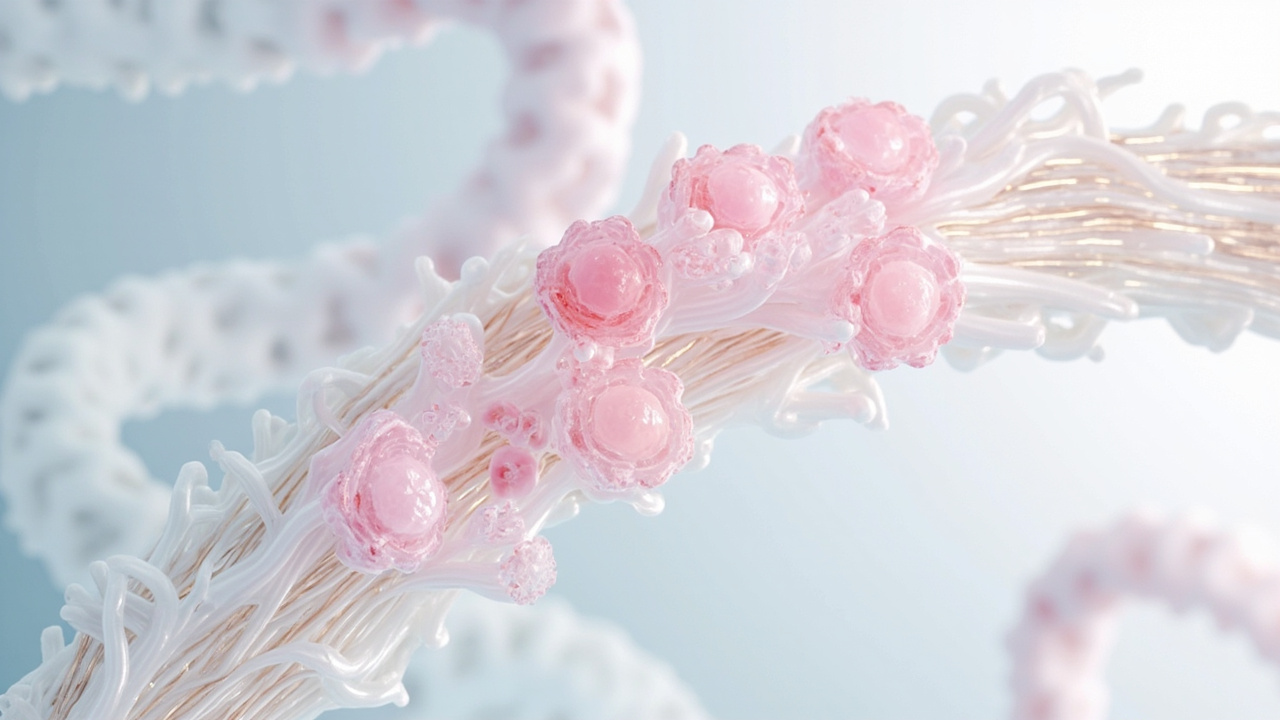
Scientists create human spinal cord injury model
Scientists at Northwestern University have created the most sophisticated lab-grown model yet for studying human spinal cord injury. The team used human spinal cord organoids—miniature organs derived from stem cells—to recreate different forms of trauma and test a regenerative therapy.
For the first time, researchers showed these organoids can faithfully reproduce the major biological consequences of a real injury. The model displayed cell death, inflammation, and the formation of a thick glial scar, which blocks nerve repair.
Dancing molecules show dramatic results
When the damaged organoids were treated with a therapy called "dancing molecules," the results were dramatic. The injured tissue produced substantial neurite outgrowth, meaning the long extensions that allow neurons to communicate began growing again.
Scar-like tissue was greatly reduced. The findings support the idea that this therapy, which recently received Orphan Drug Designation from the FDA, could improve recovery for people with spinal cord injuries.
"One of the most exciting aspects of organoids is that we can use them to test new therapies in human tissue," said Northwestern's Samuel I. Stupp, the study's senior author. "Short of a clinical trial, it's the only way you can achieve this objective."
Organoids replicate injury and inflammation
The organoids measured several millimeters across and were mature enough to sustain traumatic damage. Over several months, the team guided stem cells to form complex spinal cord tissue containing neurons and astrocytes.
They also became the first to incorporate microglia—immune cells found in the central nervous system—to better replicate the inflammatory response that follows injury. "It means that our organoid has all the chemicals that the resident immune system produces," Stupp said. "That makes it a more realistic, accurate model."
The researchers created two common injury types in the organoids:
- A laceration injury, similar to a surgical wound.
- A compressive contusion injury, comparable to trauma from a car crash.
Both led to cell death and glial scar formation, just as in a real spinal cord injury.
How the dancing molecules therapy works
First introduced in 2021, the dancing molecules therapy uses controlled molecular motion to repair tissue. It belongs to a class of supramolecular therapeutic peptides, which rely on large assemblies of molecules to activate cell receptors and stimulate the body's natural repair signals.
The therapy is delivered as a liquid injection that quickly forms a web of nanofibers resembling the spinal cord's extracellular matrix. By adjusting how dynamically the molecules move, researchers improved how effectively they interact with shifting cell receptors.
In previous animal experiments, a single injection given 24 hours after a severe injury enabled mice to walk again within four weeks. Formulations with faster molecular motion performed better than slower versions.
Therapy reduces scarring and spurs growth
After treatment, the nanofiber scaffold reduced inflammation, shrank glial scarring, and stimulated neurite extension. Neurites include axons, which are often severed in spinal cord injuries, disrupting communication between neurons and leading to paralysis.
Promoting neurite regrowth could reconnect these pathways and help restore function. Stupp credits the therapy's effectiveness to supramolecular motion, meaning the ability of the molecules to move rapidly.
"Before we even developed the injury model, we tested the therapy on a healthy organoid," he said. "The dancing molecules spun out all these long neurites... but, when we used molecules that had less or no motion, we saw nothing. This difference was very vivid."
Next steps for spinal cord research
The team plans to engineer even more advanced organoids to refine their models. They intend to develop versions that replicate chronic, long-standing injuries, which involve thicker and more persistent scar tissue.
With further development, Stupp said these miniature spinal cords could contribute to personalized medicine. The goal is to generate implantable tissue from a patient's own stem cells, reducing the risk of immune rejection.
The study, "Injury and therapy in a human spinal cord organoid," was published on February 11th in Nature Biomedical Engineering. It was supported by the Center for Regenerative Nanomedicine at Northwestern University and a gift from the John Potocsnak Family for spinal cord injury research.
Related Articles
Lack of fiber harms older brains in just three days, study in rats finds
A new study in rats found that a lack of dietary fiber, common in refined diets, can quickly impair emotional memory in older brains, specifically affecting the amygdala. This suggests fiber is crucial for cognitive health in aging.
Second pregnancy reshapes brain differently than first, study finds
A second pregnancy uniquely changes a woman's brain, with both similar and distinct neural transformations compared to a first pregnancy.
Stay in the loop
Get the best AI-curated news delivered to your inbox. No spam, unsubscribe anytime.