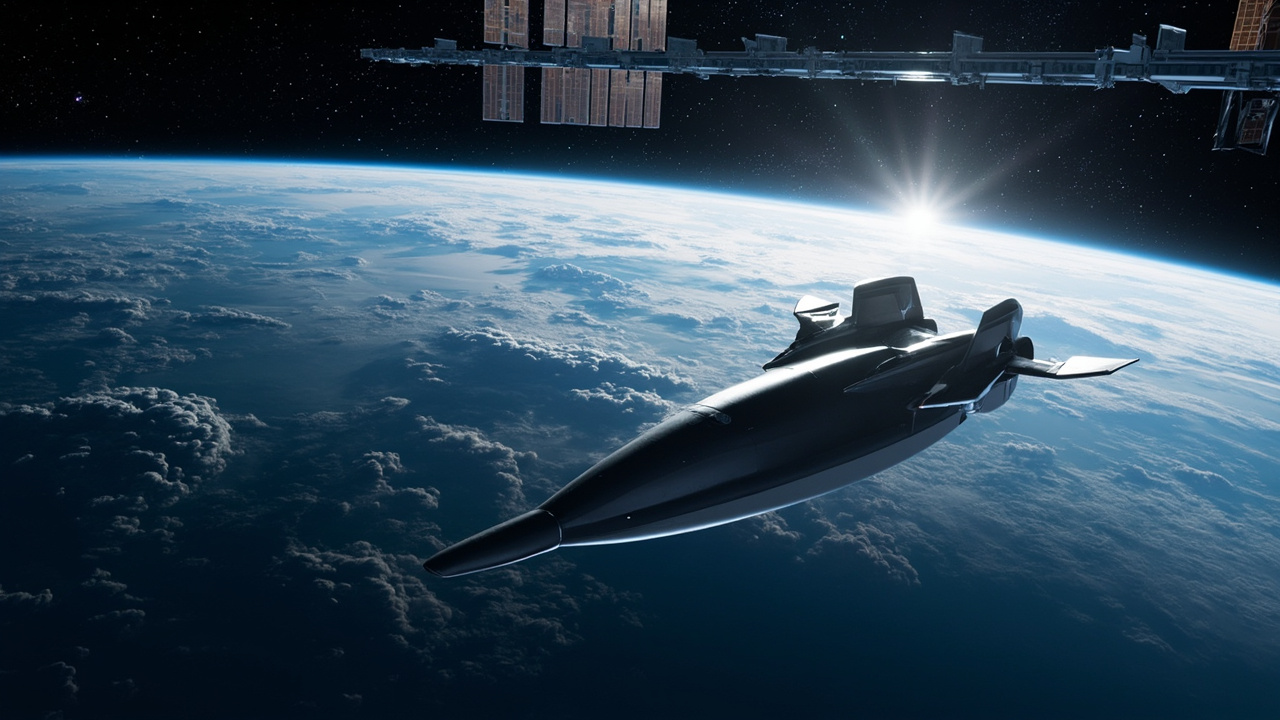
NASA labels Boeing Starliner test flight a serious "Type A" mishap
Summary
NASA declared Boeing's 2024 Starliner crewed flight a serious "Type A" mishap, citing major technical failures and flawed decision-making that risked astronaut safety. The crew returned on a SpaceX Dragon.
NASA labels Starliner flight a serious failure
NASA has formally classified Boeing’s 2024 crewed Starliner test flight as a “Type A” mishap. The designation acknowledges the mission was a serious failure.
The announcement came with a rare agency-wide letter from NASA Administrator Jared Isaacman. He took ownership of the space agency’s own shortcomings alongside those of Boeing.
Internal report reveals leadership failures
NASA also released a 311-page internal report from its Program Investigation Team. The document details the findings from the troubled Starliner flight.
In his letter, Isaacman wrote that the most troubling failure was not hardware. “It is decision-making and leadership that, if left unchecked, could create a culture incompatible with human spaceflight,” he stated.
He promised there would be “leadership accountability” for decisions surrounding the program. Isaacman did not specify what those actions would be.
A mission plagued by problems
The classification comes more than 18 months after the ill-fated flight in June 2024. Astronauts Butch Wilmore and Suni Williams launched on an Atlas V rocket toward the International Space Station.
The journey was immediately beset by problems. The spacecraft experienced multiple helium leaks in its propulsion system and intermittent thruster failures.
Despite this, Boeing officials declared success after docking. “We accomplished a lot, and really more than expected,” said Mark Nappi, Boeing’s Commercial Crew Program manager, at the time.
NASA's shifting stance on crew return
For weeks, NASA publicly backed Boeing, stating its primary option was to bring the crew home on Starliner. By early August 2024, the agency began to waver, admitting the astronauts might return on a SpaceX Crew Dragon instead.
Boeing remained steadfast. On a now-offline company update page from August 2, 2024, Boeing declared its “confidence remains high” in Starliner’s return.
NASA made its final decision on August 24. The agency ruled that Wilmore and Williams would not fly back on Starliner. They returned safely to Earth in March 2025 aboard a SpaceX Crew Dragon as part of the Crew-9 mission.
The true danger faced by astronauts
The full peril the astronauts faced was not revealed until after their return. In an interview, Wilmore described the tense minutes when he had to take manual control as thrusters failed.
He lost full control of the spacecraft and faced an impossible choice. He wasn’t sure if Starliner could safely dock or even return to Earth.
- Wilmore visualized orbital mechanics, knowing being below the station meant moving faster and drifting away.
- He grappled with the risk of losing more thrusters or communications.
- “I don’t know that we can come back to Earth at that point,” Wilmore recalled thinking. “I’m thinking we probably can’t.”
This account raised serious questions about why NASA entertained a Starliner return for so long when a safe backup existed.
Root causes traced to earlier missions
Isaacman, who reviewed the report after becoming administrator in December, sought to understand this. He said pretending the Crew Dragon option didn’t exist created a cultural issue.
“What levels of the organization inside of NASA did that exist at? Multiple levels, including, I would say, right up to the administrator of NASA,” Isaacman said.
The report found major lapses in judgment occurred even before the 2024 flight. It highlighted the uncrewed Orbital Flight Test-2 in May 2022, where three service module thrusters failed.
Isaacman’s letter criticized the investigations into those earlier failures. “The investigations often stopped at the proximate cause, treated it with a fix, or accepted the issue as an unexplained anomaly,” he wrote.
The long road back to flight
In the 11 months since the astronauts returned, NASA and Boeing have agreed the next Starliner flight will be uncrewed. NASA had previously suggested this could happen as early as April 2026.
Isaacman was non-committal on that timeline. “We are committed to helping Boeing work through this problem,” he said, adding they would fly again only after implementing report recommendations.
Boeing stated it remains “committed” to being one of NASA’s two commercial crew providers. A source told Ars that two NASA astronauts, Woody Hoburg and Jessica Wittner, have begun training for a potential “Starliner-2” mission in the first half of 2027, pending a successful uncrewed test.
Related Articles

Six skiers rescued via iPhone satellite SOS after deadly Lake Tahoe avalanche
An avalanche killed 8 skiers at Lake Tahoe; 6 survivors were rescued using iPhone's Emergency SOS via satellite. This feature connects to emergency services without cellular service. It's free on iPhone 14 and later in many countries.
NASA launches twin rockets to study aurora electrical currents
NASA launched two rockets from Alaska to study auroras, gathering data on black auroras and electric currents within the northern lights.
Stay in the loop
Get the best AI-curated news delivered to your inbox. No spam, unsubscribe anytime.