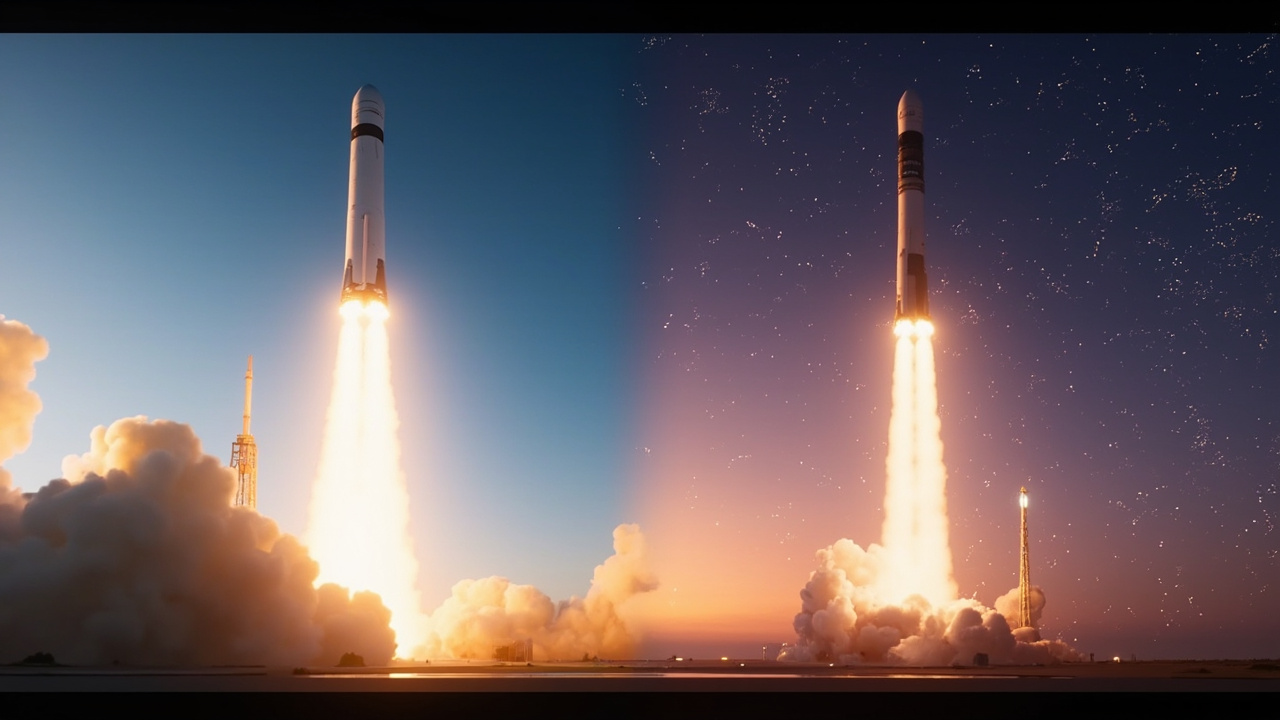
NASA launches twin rockets to study aurora electrical currents
Summary
NASA launched two rockets from Alaska to study auroras, gathering data on black auroras and electric currents within the northern lights.
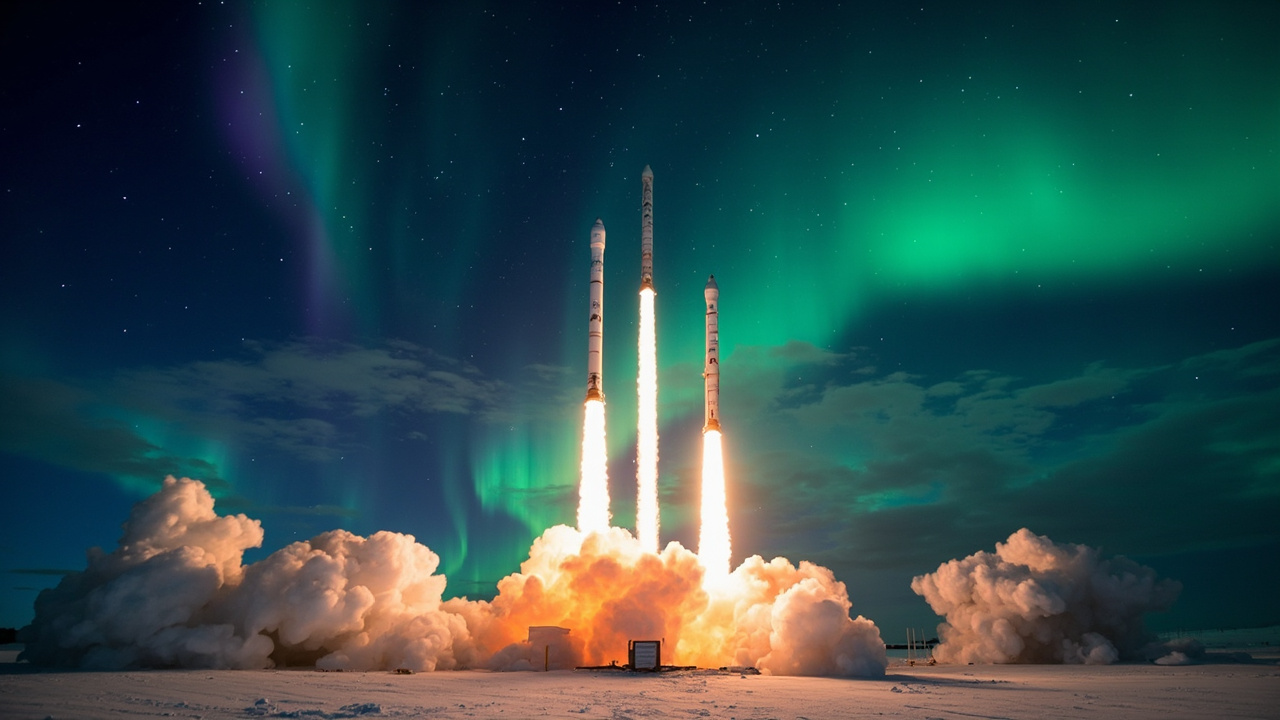
NASA launches two rockets into auroras
NASA launched two suborbital sounding rockets from Alaska this week to study the electrical currents within auroras. The missions, named BADASS and GNEISS, launched from the Poker Flat Research Range near Fairbanks on February 9th and 10th.
Their goal was to gather data on the plasma and electric fields that power the northern lights. Scientists aim to better understand these phenomena, as the geomagnetic storms that cause auroras can disrupt satellites, radio communications, and power grids on Earth.
The BADASS mission studies a dark aurora
The first mission, the Black and Diffuse Auroral Science Surveyor (BADASS), launched early on February 9th. It targeted a specific phenomenon known as a "black aurora," which appears as a dark ribbon within the brighter lights.
This occurs when electrons stream upward into space, reversing the typical flow toward Earth. The rocket reached an altitude of 224 miles (360 kilometers) before falling back.
Principal investigator Marilia Samara stated the mission went according to plan. The instruments returned high-quality data NASA will use to study what causes this electron reversal.
GNEISS creates a 3D scan of electric currents
The second mission, the Geophysical Non-Equilibrium Ionospheric System Science (GNEISS), launched two rockets back-to-back on February 10th. Each rocket reached a peak altitude of 198 miles (319 kilometers).
Principal investigator Kristina Lynch described the goal as creating a three-dimensional "CT scan" of the electric currents flowing through an aurora. "We want to know how the current spreads downward through the atmosphere," Lynch said in a statement.
The mission used the two rockets in concert with a network of ground receivers. This setup allows researchers to map the aurora's electrical environment in detail from multiple points.
Why studying auroras matters
Beyond their beauty, auroras are a visible sign of intense space weather interacting with Earth's magnetic field. The geomagnetic storms that produce them pose real risks to technology.
These storms can:
- Damage satellites and endanger astronauts in orbit.
- Cause widespread radio blackouts and GPS navigation errors.
- Induce powerful currents in power grids, leading to blackouts.
- Force airlines to divert polar flights due to communication issues.
The data from these Alaska launches will help scientists model this space weather more accurately. This could lead to better forecasts and protective measures for critical infrastructure.
Related Articles
NASA selects Vast for private astronaut mission to space station in 2027
NASA selected Vast to operate a private astronaut mission to the ISS in 2027, supporting the transition to commercial space stations as the ISS nears retirement.
Scientists trace origin of ultra-energetic 'Amaterasu' cosmic ray
Scientists found the Amaterasu particle, an ultra-energetic cosmic ray, likely came from a nearby star-forming galaxy, not an empty void.
Stay in the loop
Get the best AI-curated news delivered to your inbox. No spam, unsubscribe anytime.