NASA launches two rockets to study northern lights electrical currents
Summary
NASA launched two rocket missions from Alaska to study the electrical forces behind auroras. The GNEISS mission used two rockets to create a 3D scan of auroral currents, while another studied dark patches within the lights.
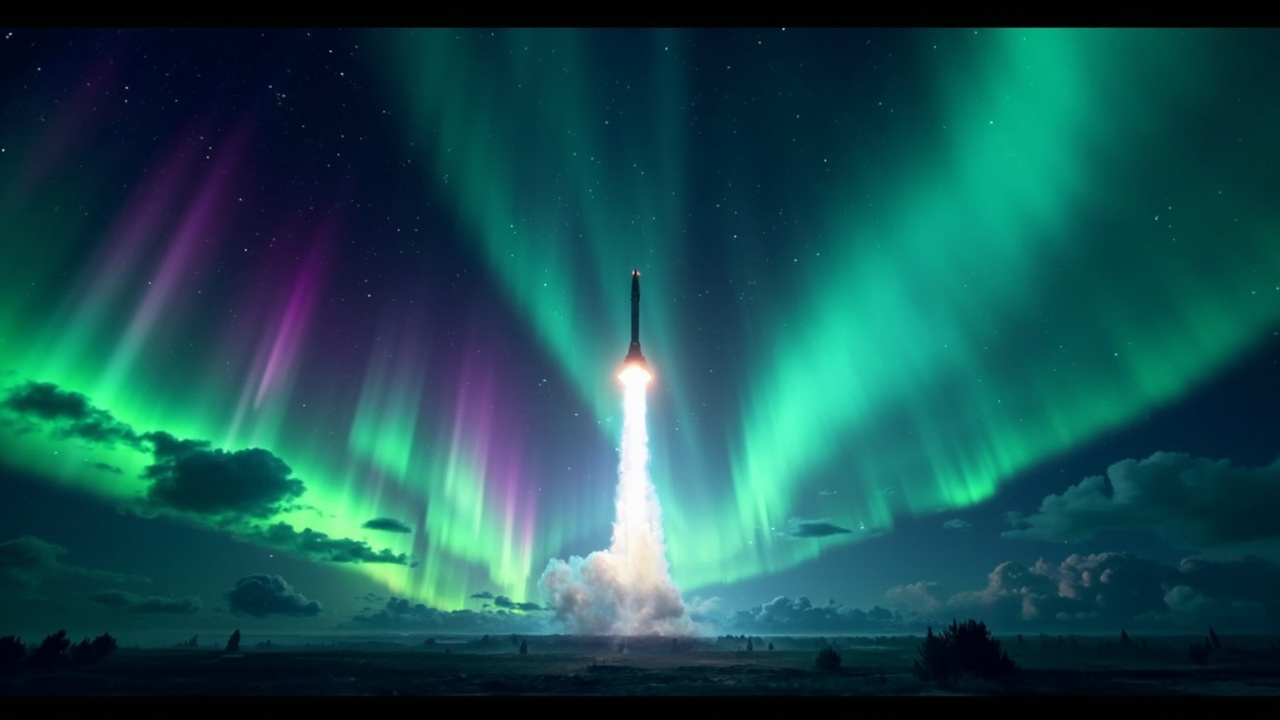
NASA launches two missions to map aurora's electrical circuit
NASA has successfully launched two sounding rocket missions from Alaska to study the electrical currents that power the northern lights. The missions, named the Black and Diffuse Auroral Science Surveyor and the Geophysical Non-Equilibrium Ionospheric System Science (GNEISS), lifted off from the Poker Flat Research Range near Fairbanks.
The Black and Diffuse Auroral Science Surveyor launched on February 9 at 3:29 a.m. AKST. Principal investigator Marilia Samara reported that all instruments performed as planned and the mission returned high-quality data.
The two-rocket GNEISS mission followed with a dramatic back-to-back launch on February 10. The rockets reached peak altitudes of approximately 198.3 miles and 198.8 miles, respectively. Principal investigator Kristina Lynch said the team is pleased with both the launch and the initial data.
How the aurora forms an electrical loop
The visible glow of the aurora is powered by electrons streaming from space into Earth's upper atmosphere. These particles energize gases, causing them to light up, similar to electricity powering a lightbulb.
This process is part of a larger electrical circuit. For electrons to flow into the atmosphere, they must also have a return path to space to complete the loop. The incoming particle beams are focused, but the return flow is scattered and complex.
After igniting the aurora, electrons spread out in many directions. Their motion is shaped by collisions, winds, and magnetic fields before they eventually weave their way back to space.
GNEISS creates a 3D scan of the sky
The GNEISS mission was designed to map how this returning electrical current closes the circuit. "We want to know how the current spreads downward through the atmosphere," said principal investigator Kristina Lynch, a professor at Dartmouth College.
The mission used two rockets and a coordinated network of ground receivers to build a three-dimensional picture. "It's essentially like doing a CT scan of the plasma beneath the aurora," Lynch said.
The two rockets launched side-by-side into the same aurora, each releasing four subpayloads to take measurements at multiple points. As they flew, the rockets transmitted radio signals through the surrounding plasma to ground receivers.
- The plasma altered the signals as they passed through, similar to how body tissues alter X-rays.
- By analyzing these changes, scientists can determine plasma density and map where electrical currents flow.
- The result is a large-scale, CT-style scan of the aurora's electrical environment.
Why mapping these currents matters
Understanding auroral currents is crucial for space weather research. These currents control how energy from space is distributed through Earth's upper atmosphere.
When currents spread out, they heat the atmosphere, stir up winds, and create turbulence. This turbulence can affect satellites traveling through the region.
Researchers combine data from multiple sources to build a complete picture. NASA's EZIE satellite mission, launched in March 2025, measures these currents from orbit. By adding satellite data and ground imagery to direct rocket measurements, scientists can examine the system from all angles.
"If we can put the in situ measurements together with the ground-based imagery, then we can learn to read the aurora," Lynch said.
Investigating dark patches in the glow
The other mission, the Black and Diffuse Auroral Science Surveyor, focused on unusual dark regions within auroras known as black auroras. These blank spots may mark areas where electrical currents suddenly reverse direction.
This launch was the mission's second attempt after a 2025 effort was postponed. The new data will help researchers understand how these dark patches fit into the broader electrical circuit.
Sounding rockets provide a rare chance to fly instruments directly through an aurora as it happens. Through these brief, precisely timed missions, NASA is turning fleeting light shows into deeper insight about how space weather shapes our planet.
Related Articles
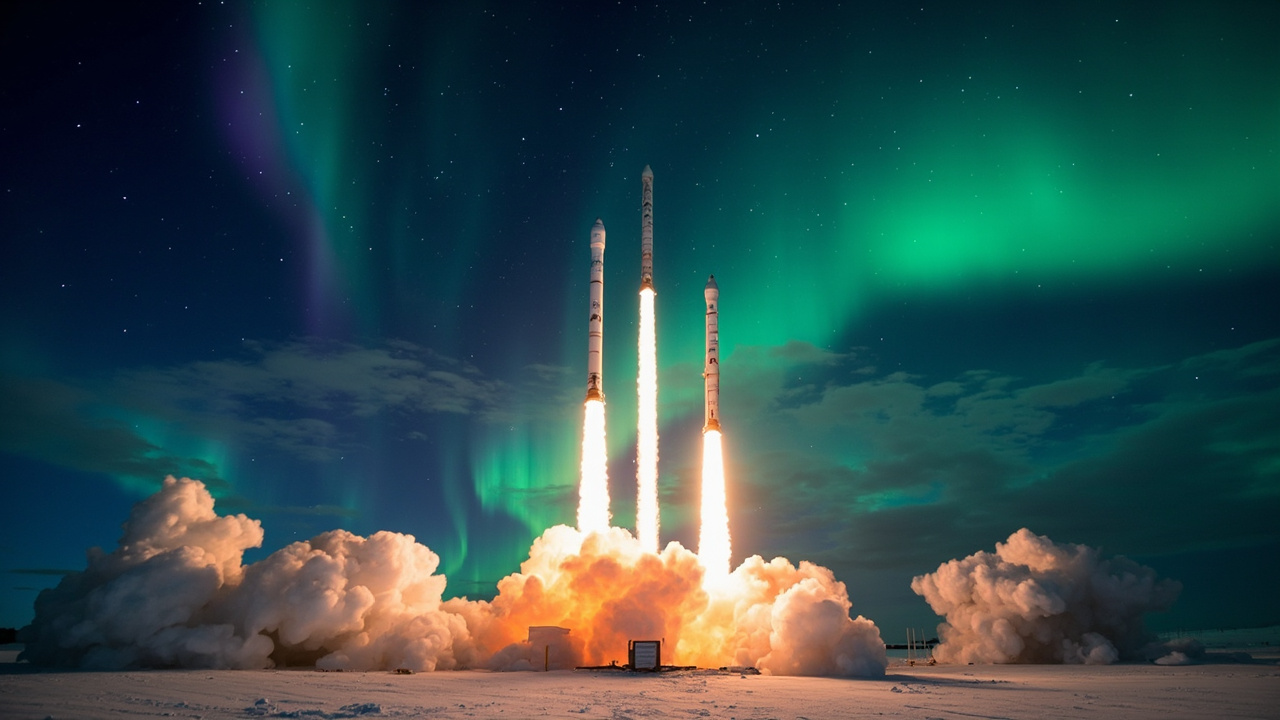
NASA launches twin rockets to study aurora electrical currents
NASA launched two rockets from Alaska to study auroras, gathering data on black auroras and electric currents within the northern lights.
NASA selects Vast for private astronaut mission to space station in 2027
NASA selected Vast to operate a private astronaut mission to the ISS in 2027, supporting the transition to commercial space stations as the ISS nears retirement.
Stay in the loop
Get the best AI-curated news delivered to your inbox. No spam, unsubscribe anytime.