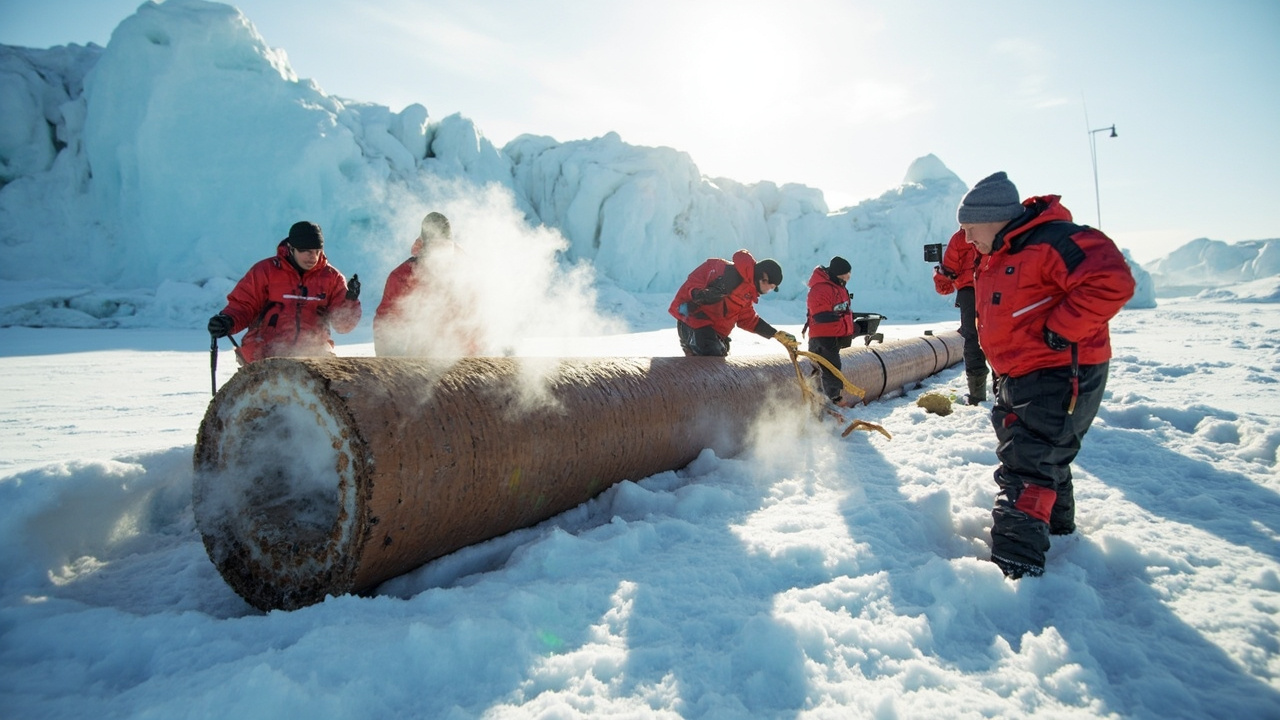
NOAA snow data error hid decades of Arctic snow loss
Summary
NOAA data initially suggested Northern Hemisphere autumn snow cover was growing, but a new study finds it's actually shrinking due to improved satellite detection creating a false trend. This confirms snow loss is accelerating Arctic warming.
NOAA's key snow cover data was wrong for decades
A critical dataset used for decades to track climate change was wrong. New research shows that a key record of Northern Hemisphere snow cover, maintained by the U.S. National Oceanic and Atmospheric Administration (NOAA), mistakenly showed snow cover was growing when it was actually shrinking.
The data has been used in major climate assessments by the United Nations' Intergovernmental Panel on Climate Change (IPCC). The error stemmed from improvements in satellite technology over time, which created a false trend.
Why snow cover is a climate linchpin
Snow cover is a major regulator of Earth's temperature. It reflects about 80 percent of incoming solar energy back into space, while bare ground reflects less than half.
When snow disappears, darker land absorbs more heat. This extra warmth melts more snow, creating a feedback loop that accelerates warming. This "snow-albedo effect" is a key driver of Arctic amplification, where the Arctic heats up much faster than the rest of the planet.
"Snow loss leads to a decrease in albedo which leads to higher energy absorption which, in turn, leads to enhanced snow loss," explains lead study author Aleksandra Elias Chereque, a PhD student at the University of Toronto.
The false trend and the real one
For years, the NOAA data indicated autumn snow cover in the Northern Hemisphere was increasing by about 1.5 million square kilometers per decade. That's an area roughly the size of one and a half Ontarios.
The new analysis, published in Science Advances, reveals the opposite. Snow cover has actually been decreasing by about half a million square kilometers per decade, or about half the area of Ontario.
Elias Chereque and her colleagues, including University of Toronto physicist Paul Kushner, investigated long-standing concerns from climate researchers that the NOAA trends didn't align with other observations.
Better satellites created a misleading picture
The team pinpointed the cause: evolving satellite technology. As instruments improved over the decades, they became better at detecting thin, patchy snow that earlier satellites would have missed.
This increasing sensitivity created the illusion that snow extent was expanding, when the satellites were simply seeing more detail. "It's as if the satellite's 'eye glasses' got better and better over that period," says Elias Chereque.
The core components of the data drift were:
- Changing satellite instruments with different sensitivities.
- Evolving data collection and processing techniques.
- A lack of correction for the improving "vision" of the satellites over time.
Stronger evidence for a warming Arctic
The correction strengthens the scientific consensus that snow cover is declining. It also increases confidence in the role of the snow-albedo feedback in rapidly heating the Arctic.
"We know snow loss is influenced by anthropogenic warming and snow loss also creates more potential for warming," says Elias Chereque. The revised data provides a clearer picture of this vicious cycle.
Beyond correcting the record, the work shows scientists how to properly use the historical dataset. This is crucial for evaluating the accuracy of climate models that forecast future warming.
"Developing tools like this helps us better understand climate and helps us make better predictions about the future," Elias Chereque concludes.
Related Articles

Species turnover slowing globally despite climate change, study finds
Contrary to expectations, species turnover in ecosystems has slowed, not accelerated, with global warming. This suggests biodiversity loss is hindering natural ecological dynamics.

Hobbit' humans went extinct 61,000 years ago due to severe drought
Climate change caused a severe drought that likely drove Homo floresiensis, the "hobbit" species, to extinction around 50,000 years ago.
Stay in the loop
Get the best AI-curated news delivered to your inbox. No spam, unsubscribe anytime.