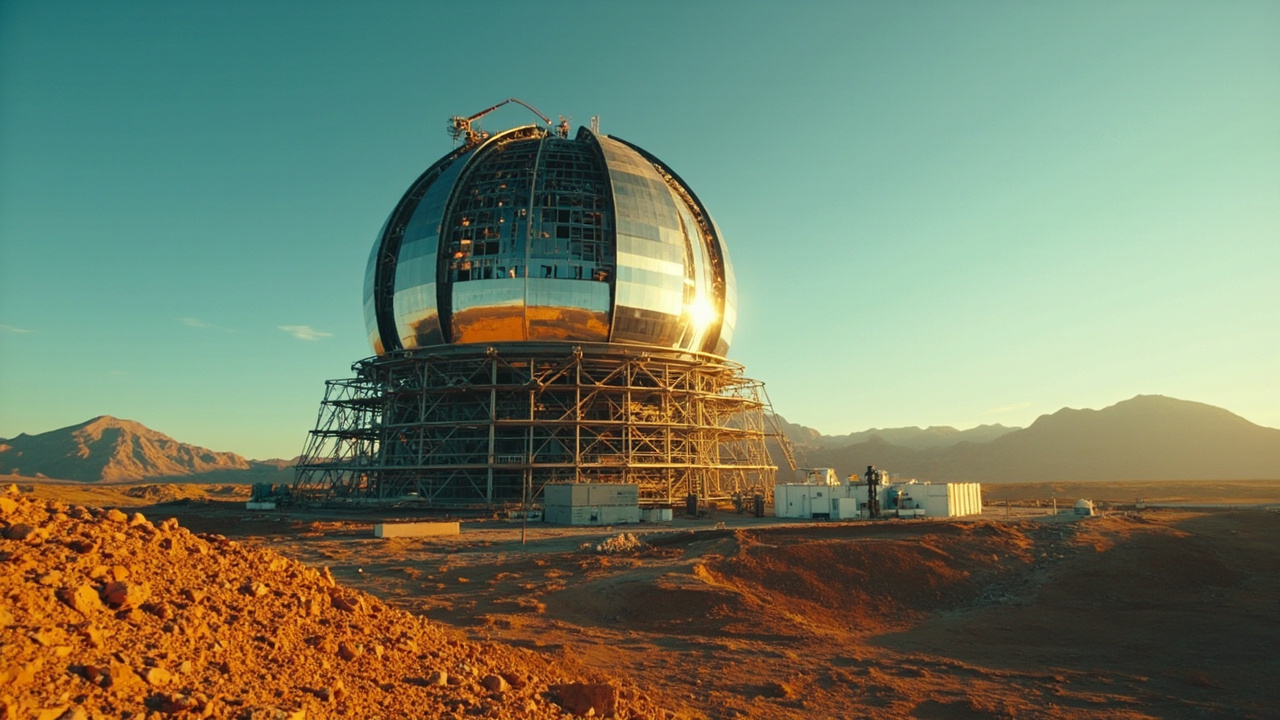
Rocky planet in outer orbit defies standard formation theory
Summary
Astronomers found a planetary system with a rocky outer planet, challenging the theory that only gas giants form far from stars. This suggests planets may form sequentially, not all at once.
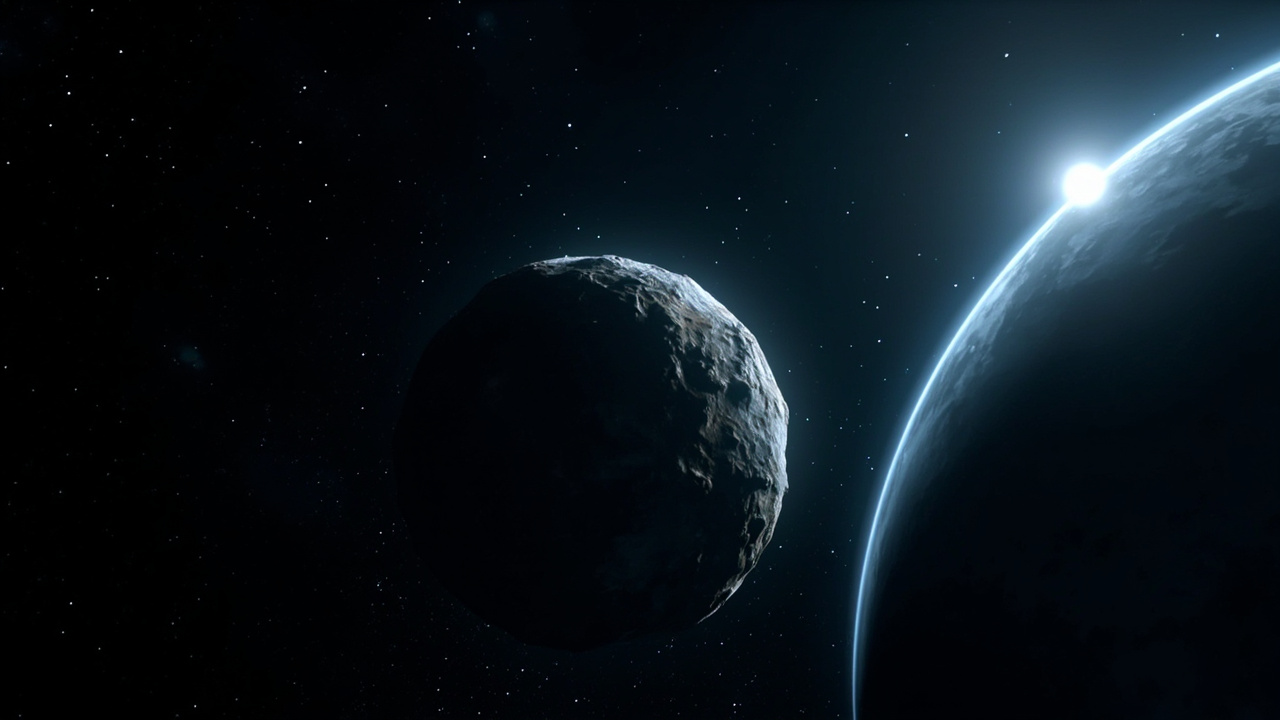
A rocky planet defies the standard model
Astronomers have discovered a planetary system that directly contradicts the leading theory of how planets form. The system, orbiting the star LHS 1903, contains a rocky planet in its outer reaches, where only gas giants are expected to exist.
This discovery, reported in the journal Science, challenges the idea that a planet's composition is strictly determined by its distance from its star. The standard model predicts a clear pattern: small, rocky worlds close to the star, and large, gassy ones farther out.
Our own solar system fits this model perfectly.
- Mercury, Venus, Earth, and Mars are inner, rocky planets.
- Jupiter, Saturn, Uranus, and Neptune are outer gas and ice giants.
An unexpected fourth world
An international team led by Prof. Ryan Cloutier of McMaster University and Prof. Thomas Wilson of the University of Warwick used data from ground-based telescopes and the European Space Agency's CHEOPS satellite to study the system. They initially found three planets around the cool, faint red dwarf star.
The lineup seemed normal: a rocky inner planet, followed by two smaller, Neptune-like gas worlds. But years of observations revealed a fourth planet, LHS 1903 e, orbiting farthest from the star.
Surprisingly, this distant world appears to be rocky. "We've seen this pattern: rocky inside, gaseous outside, across hundreds of planetary systems," Cloutier said. "But now, the discovery of a rocky planet in the outer part of a system forces us to rethink."
Ruling out simple explanations
The researchers first investigated if a catastrophic event could explain the rocky outer planet. They ran detailed computer simulations to test two main ideas.
One possibility was that a massive collision stripped away the planet's atmosphere. Another was that the planets migrated from their original positions over time.
The team's analysis of the planets' orbits ruled out both scenarios. The system's current architecture appears to be its original one, making the rocky outer planet an even bigger puzzle.
A new theory of sequential formation
The findings point to a more radical explanation: the planets did not all form at the same time. Instead, they may have developed sequentially in a process called inside-out planet formation.
In the standard model, planets coalesce from a protoplanetary disk of gas and dust around a young star, with multiple embryos forming simultaneously. In the sequential model, planets finish forming one after another as local conditions change.
By the time the outermost planet, LHS 1903 e, was assembling, most of the gas in its region of the disk may have already dissipated. This would have left it with only rocky material, preventing it from building a thick atmosphere.
"It's remarkable to see a rocky world forming in an environment that shouldn't favour that outcome," Cloutier said. "It challenges the assumptions built into our current models."
A sign of planetary diversity
The discovery raises a fundamental question: is LHS 1903 a rare anomaly, or is it a sign of a broader diversity we are only beginning to see? As detection methods improve, astronomers expect to find more systems that defy old expectations.
"Each new system adds another data point to a growing picture of planetary diversity," Cloutier said. This diversity forces scientists to expand the rulebook on how worlds are built across the galaxy.
The research suggests that the classic template of planet formation is not universal. Other processes, like sequential inside-out formation, can create systems that look nothing like our own.
Related Articles
Earth's life-giving chemistry was a cosmic fluke, study says
Life needs phosphorus and nitrogen. A study shows that during a planet's core formation, oxygen levels must be in a narrow "Goldilocks zone" to retain both elements. Earth had this luck; Mars did not. This changes how we search for habitable planets.
Annular solar eclipse creates 'ring of fire' over Antarctica
A "ring of fire" annular solar eclipse occurred over Antarctica on Feb. 17, visible as a partial eclipse in some southern regions.
Stay in the loop
Get the best AI-curated news delivered to your inbox. No spam, unsubscribe anytime.