Satellites capture moon's shadow over Antarctica in Feb. 17 solar eclipse
Summary
Satellites captured the Feb. 17 annular solar eclipse over Antarctica, where the moon blocked most of the sun, leaving a "ring of fire." The next major eclipse is a total lunar eclipse on March 3.
Satellites capture Antarctic "ring of fire" eclipse
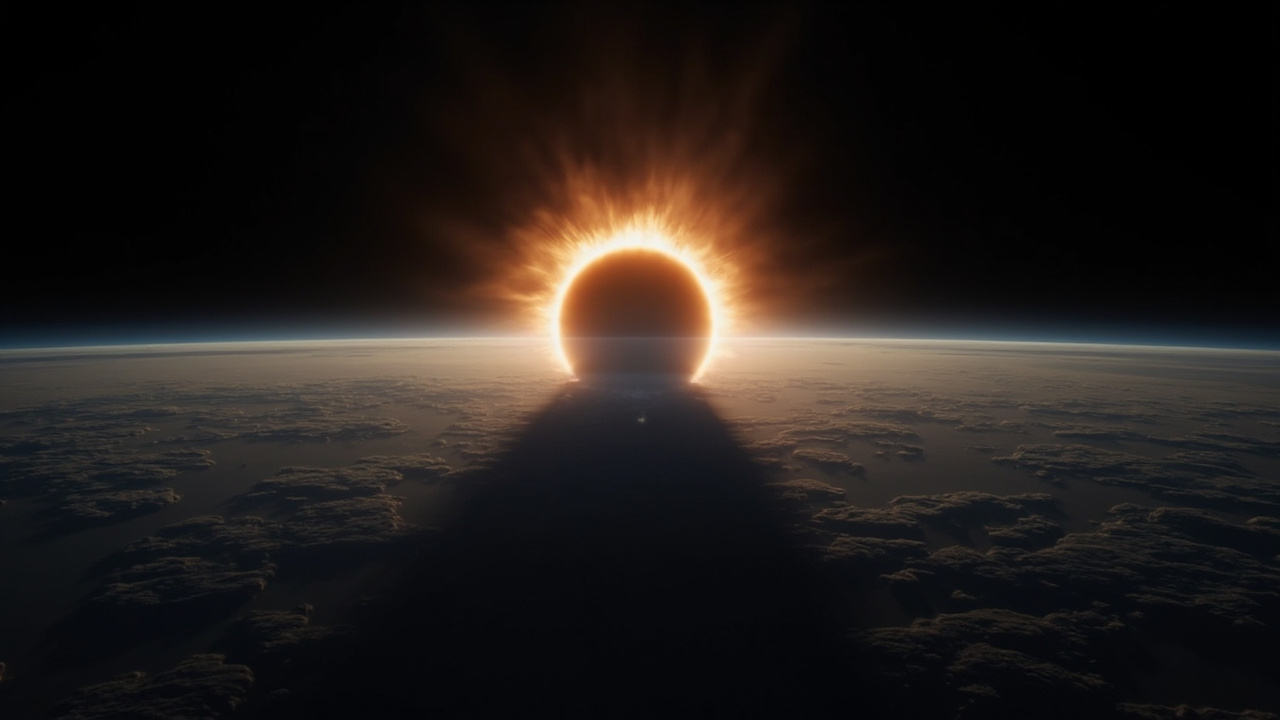
Satellites captured stunning views of an annular solar eclipse on February 17 as the moon's shadow swept across a remote part of Antarctica. The event was visible only to researchers stationed on the frozen continent.
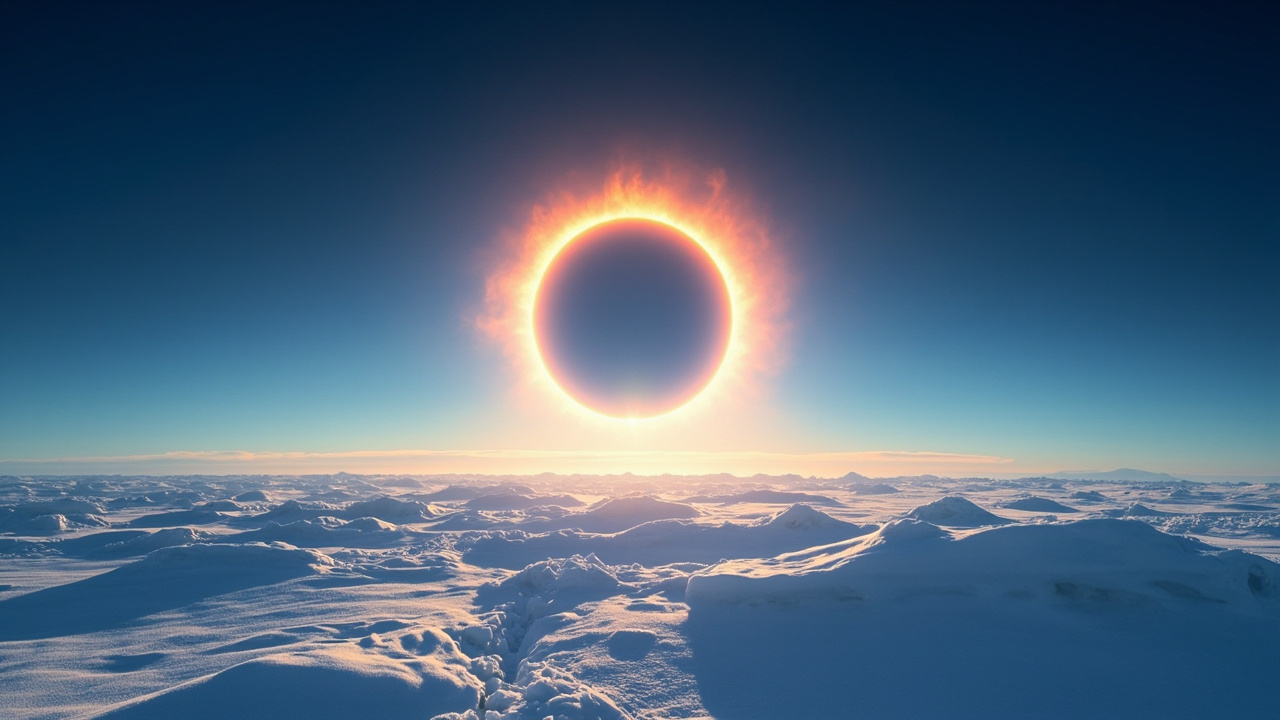
An annular eclipse occurs when the moon is at a distant point in its orbit, appearing too small to completely cover the sun. This leaves a thin, bright "ring of fire" around the moon's silhouette.
Views from orbit
The European Organisation for the Exploitation of Meteorological Satellites (Eumetsat) captured imagery of the moon's immense shadow moving across Antarctica. The shadow spanned a path roughly 383 miles (616 kilometers) wide.
South Korea's GEO-KOMPSAT-2A weather satellite also observed the event from its geostationary orbit 22,370 miles (36,000 km) above Earth. From a different vantage point, NOAA's GOES-19 satellite stared directly at the sun.
GOES-19's Solar Ultraviolet Imager instrument captured the moon's dark silhouette moving across the solar disk. The image also shows bright, looping structures of plasma in the sun's atmosphere, shaped by its magnetic field.
Eclipse season continues with a blood moon
Solar eclipses occur as part of an eclipse "season." The second act of this season arrives on March 3 with a total lunar eclipse.
During this event, Earth will pass between the sun and moon, casting its shadow on the lunar surface. Sunlight filtered through Earth's atmosphere will give the moon a dramatic reddish hue, often called a "blood moon."
Visibility for the March 3 lunar eclipse will be widespread. Approximately 2.5 billion people across Australia, New Zealand, East Asia, and parts of North America will be able to see it.
Major total solar eclipse coming in August
The next major solar event is a total solar eclipse on August 12. For observers in the path of totality, the moon will completely block the sun's surface for a brief period.
The path of totality will cross:
- Greenland
- Iceland
- Spain
- Portugal
- Russia
Hundreds of millions of people outside this path will witness a partial eclipse. Those planning to view it should use proper solar viewing gear, like certified eclipse glasses, to protect their eyes.
Related Articles
Annular solar eclipse creates 'ring of fire' over Antarctica
A "ring of fire" annular solar eclipse occurred over Antarctica on Feb. 17, visible as a partial eclipse in some southern regions.

Giant dome for world's largest telescope nears completion in Chile
A new photo shows the Extremely Large Telescope's dome nearing completion in Chile. The massive structure will house a giant mirror, with first light expected in 2029, revolutionizing our view of the cosmos.
Stay in the loop
Get the best AI-curated news delivered to your inbox. No spam, unsubscribe anytime.