
Scientists identify brain receptors that clear Alzheimer's plaques
Summary
Scientists found two brain receptors that control amyloid beta clearance in Alzheimer's. Activating them boosted natural cleanup, reducing plaques and improving memory in mice, suggesting a path to safer, cheaper drugs.
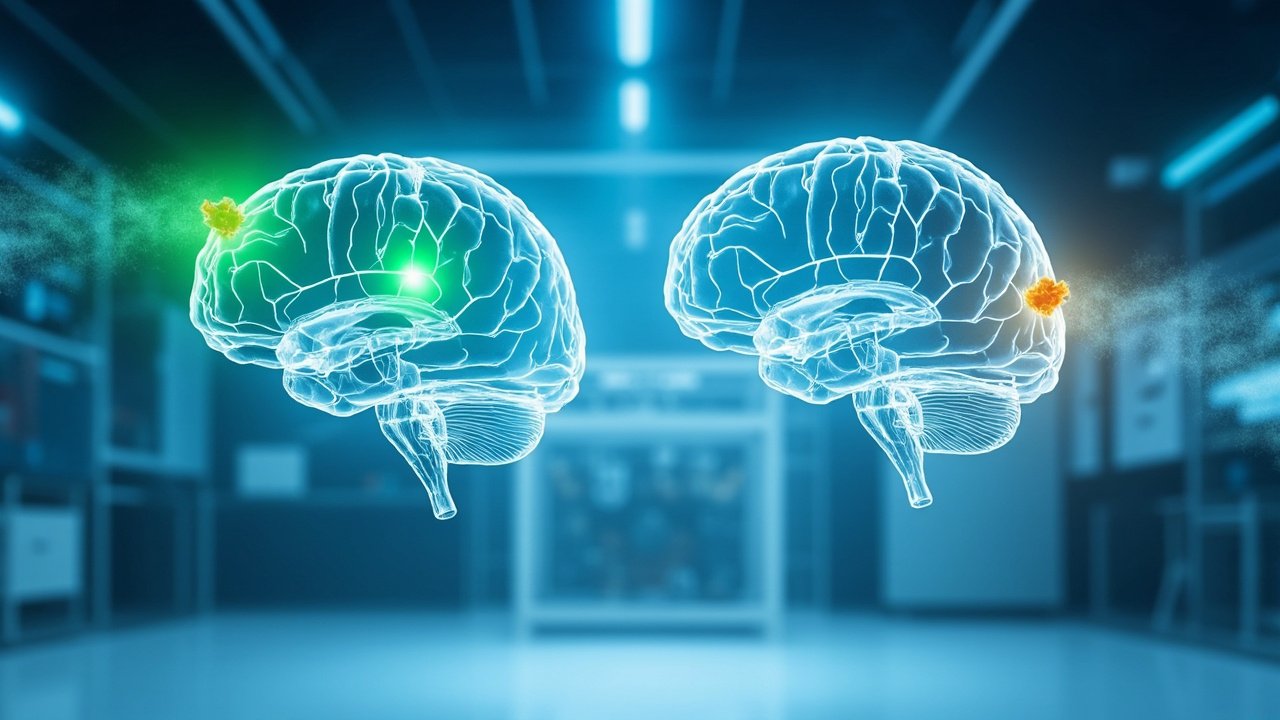
Scientists identify key Alzheimer's receptors
Researchers have identified two brain receptors that regulate the breakdown of amyloid beta, the toxic protein that clumps in the brains of Alzheimer's patients. The discovery, published in the Journal of Alzheimer's Disease, points toward a potential new class of safer, cheaper drugs.
Alzheimer's disease is marked by plaques of amyloid beta. An enzyme called neprilysin normally clears this protein, but its activity declines with age and disease progression.
The international team found that two somatostatin receptors, SST1 and SST4, work together to control neprilysin levels in the hippocampus, a brain region critical for memory.
Boosting the brain's cleanup crew
The scientists conducted experiments on genetically modified mice and lab-grown cells. They discovered that when both SST1 and SST4 receptors were missing, neprilysin levels dropped.
This led to a buildup of amyloid beta and caused memory problems in the mice. The finding confirmed the receptors' role in the brain's natural defense system.
"Our findings show that the brain's own defence against amyloid beta can be strengthened by stimulating these receptors," says Per Nilsson, a docent at Karolinska Institutet.
A promising compound improves symptoms
The research team then tested a compound designed to activate the SST1 and SST4 receptors. They administered it to mice with Alzheimer's-like brain changes.
The treatment successfully increased neprilysin levels and reduced amyloid beta buildup. It also improved the animals' behavior.
Critically, the researchers observed that the treatment did not cause serious side effects in the mice, a major hurdle for current Alzheimer's therapies.
The case for small-molecule drugs
Most advanced Alzheimer's treatments today are antibody-based. These drugs, like lecanemab (Leqembi), can be effective but come with significant drawbacks.
- They are extremely expensive, often costing over $26,000 annually.
- They require intravenous infusions.
- They can trigger serious side effects, including brain swelling and bleeding.
The newly identified receptors offer a different path. SST1 and SST4 belong to the G protein-coupled receptor family, a common and well-understood drug target.
"If we can instead develop small molecules that pass the blood-brain barrier, our hope is that we will be able to treat the disease at a significantly lower cost and without serious side effects," says Nilsson. Such drugs could potentially be taken as a pill.
A collaborative international effort
The project was a collaboration between the Karolinska Institutet in Sweden and the RIKEN Center for Brain Science in Japan, with contributions from several other international universities.
Funding was provided by multiple organizations, including:
- The Swedish Research Council
- The Hållsten Research Foundation
- The Alzheimer's Foundation
- The private initiative "Innovative ways to fight Alzheimers disease"
The researchers report no conflicts of interest. While the findings are promising, any potential drug developed from this research would still require years of clinical testing in humans.
Related Articles
Lack of fiber harms older brains in just three days, study in rats finds
A new study in rats found that a lack of dietary fiber, common in refined diets, can quickly impair emotional memory in older brains, specifically affecting the amygdala. This suggests fiber is crucial for cognitive health in aging.

Second pregnancy reshapes brain differently than first, study finds
A second pregnancy uniquely changes a woman's brain, with both similar and distinct neural transformations compared to a first pregnancy.
Stay in the loop
Get the best AI-curated news delivered to your inbox. No spam, unsubscribe anytime.