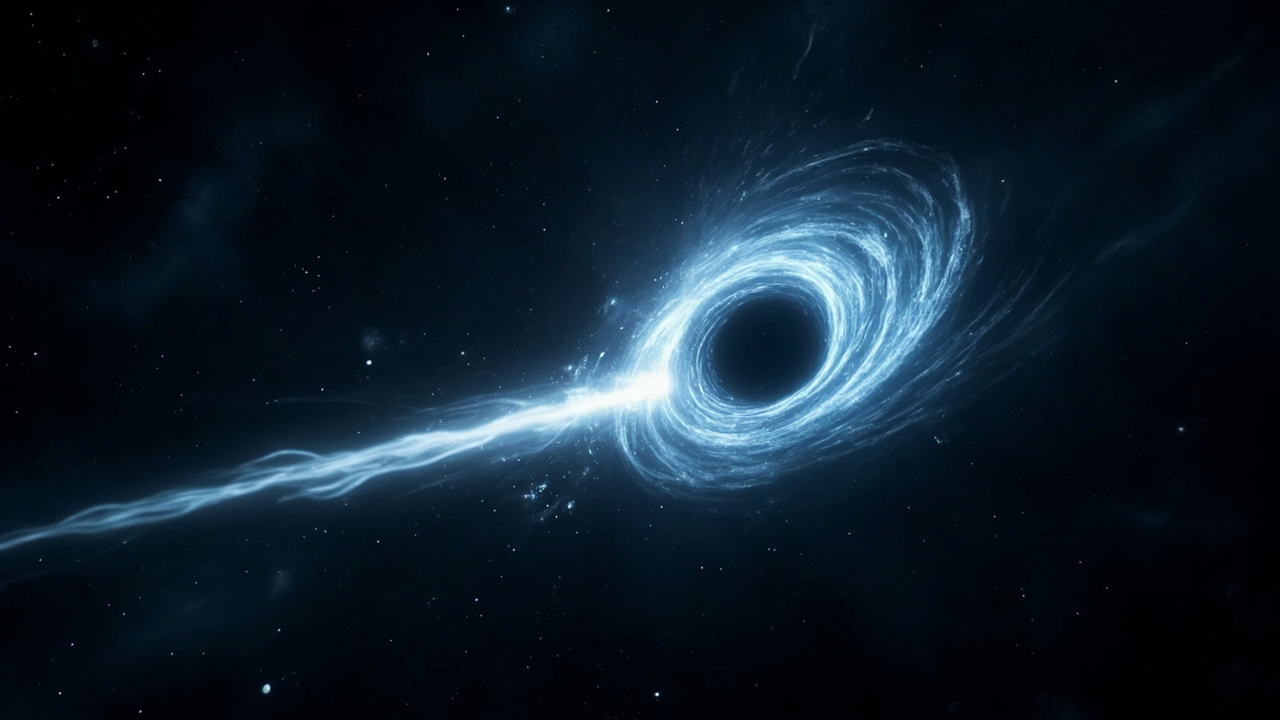
Universe may collapse in big crunch in 20 billion years, physicist says
Summary
A physicist's updated model suggests the universe, now 13.8 billion years old, may collapse in a "big crunch" in about 20 billion years, based on new dark energy data indicating a negative cosmological constant.
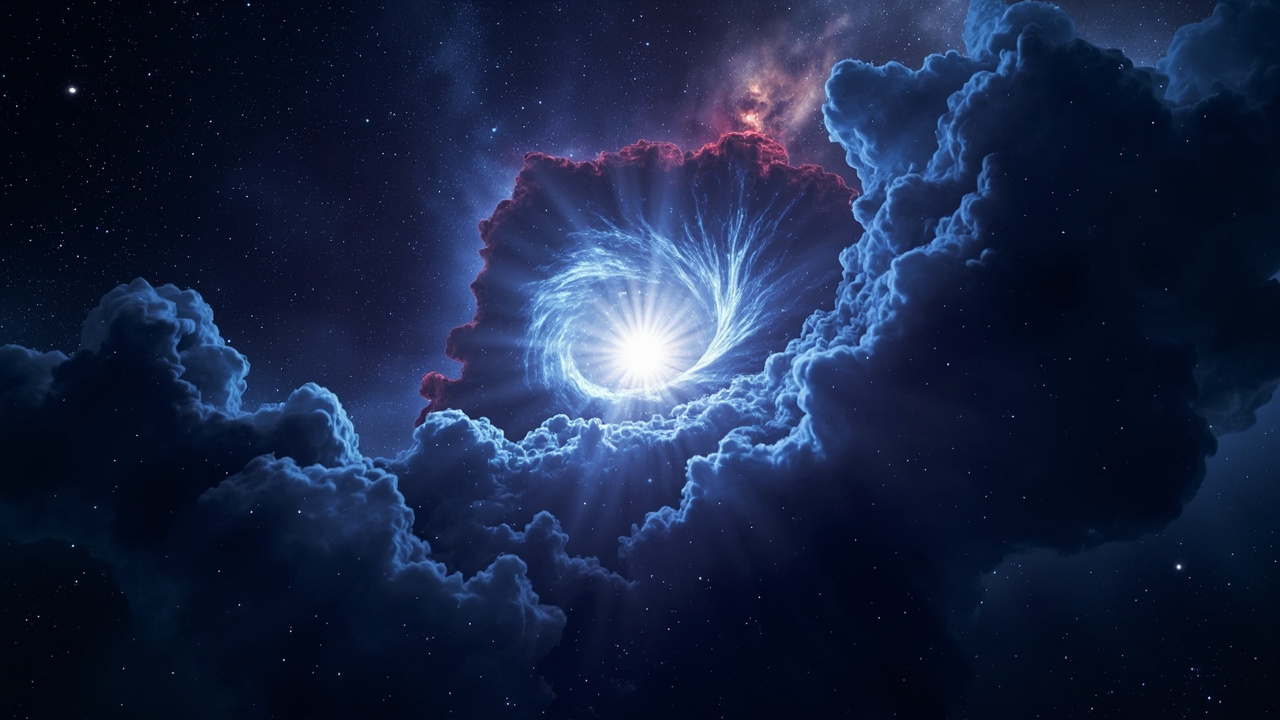
The universe may collapse in a "big crunch"
A Cornell physicist has calculated that the universe is roughly at its midpoint and will collapse in a "big crunch" in about 20 billion years. Henry Tye, a professor emeritus, published these findings in the Journal of Cosmology and Astroparticle Physics.
His model suggests the cosmos will expand for another 11 billion years before reaching its maximum size. It will then contract, collapsing back into a single point.
New data flips a key cosmic constant
The conclusion hinges on the cosmological constant, a concept introduced by Albert Einstein. For decades, the prevailing belief was that this constant was positive, dooming the universe to expand forever.
"The new data seem to indicate that the cosmological constant is negative, and that the universe will end in a big crunch," Tye said. His updated model supports this reversal, which would define the universe's end.
Dark energy surveys provide critical evidence
Key evidence comes from two major observatories: the Dark Energy Survey (DES) in Chile and the Dark Energy Spectroscopic Instrument (DESI) in Arizona. Both released new data this year.
Their findings closely agree and challenge the idea that dark energy is a simple, constant force. Instead, the data suggests something more complex is influencing the universe's expansion.
Tye and his co-authors proposed a hypothetical, low-mass particle to explain this. Early in cosmic history, it acted like a cosmological constant, but its effects changed over time.
- This adjustment fits the latest observations.
- It pushes the underlying cosmological constant into negative territory.
More cosmic data is on the way
Researchers are actively gathering more information to refine these estimates. DESI will continue collecting observations for another year.
Several other major projects are already contributing or preparing to begin their surveys. These include:
- The Zwicky Transient Facility in San Diego
- The European Euclid space telescope
- NASA's recently launched SPHEREx mission
- The Vera C. Rubin Observatory
Knowing the end points of cosmic life
Tye says it's significant that scientists can now attempt to calculate the universe's total lifespan in measurable terms. The universe is currently 13.8 billion years old.
"For any life, you want to know how life begins and how life ends -- the end points," he said. "For our universe, it's also interesting to know, does it have a beginning? In the 1960s, we learned that it has a beginning. Then the next question is, 'Does it have an end?'"
He notes that for many years, scientists thought the universe would expand forever. "It's good to know that, if the data holds up, the universe will have an end."
Related Articles
Astronomers spot 4-million-light-year cosmic filament in Ursa Major
Astronomers used China's FAST telescope to discover a nearly straight line of galaxies spanning four light-years. This reveals a delicate filament of the cosmic web, dominated by dark matter, which acts as a hidden pathway guiding galaxy formation.
Einstein-Rosen bridge reinterpreted as quantum link between opposite time arrows
Einstein-Rosen bridges are not wormholes but a quantum link between two time directions, offering a solution to black hole information paradox and suggesting the Big Bang may have been a bounce from a prior universe.
Stay in the loop
Get the best AI-curated news delivered to your inbox. No spam, unsubscribe anytime.